5 Types of Potatoes and Which to Pick for Each Dish
 16 min read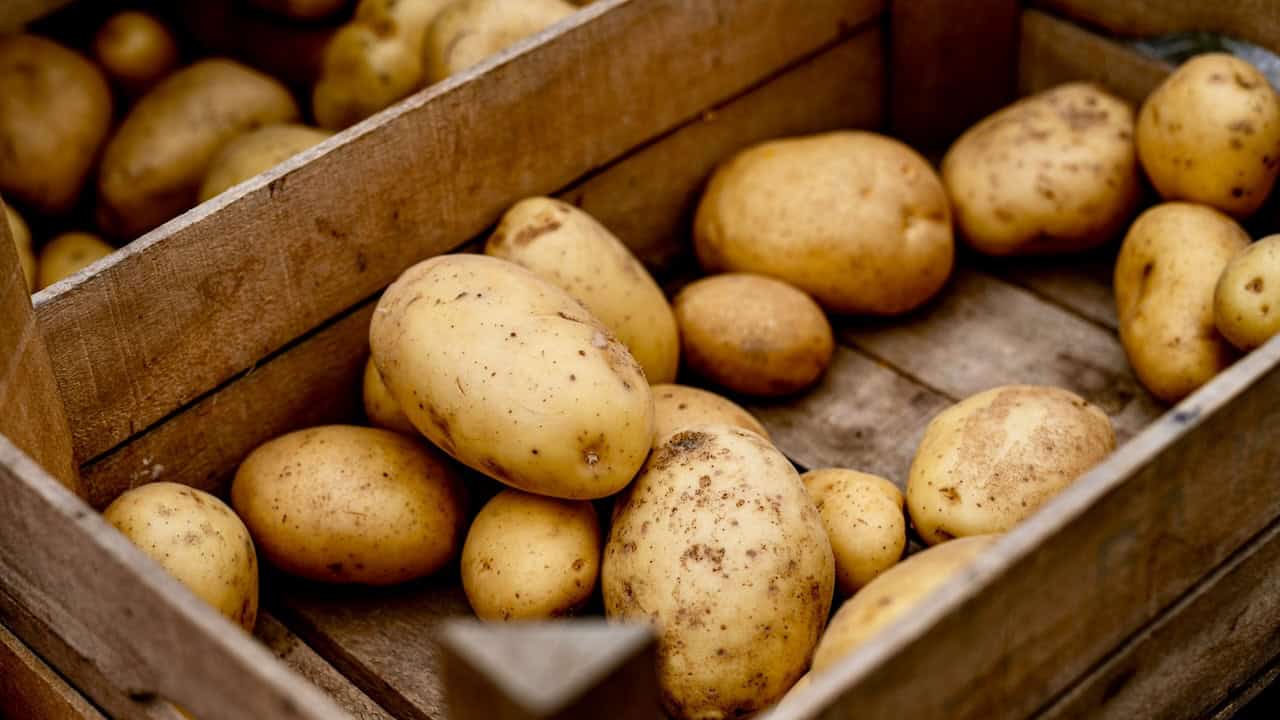
Russet bags and Yukon Gold bags sit shoulder to shoulder on the produce shelf for a reason. They look interchangeable, they price within pennies of each other, and the bag the cook grabs is often whichever sits closer to hand. That habit is what makes mashed potatoes come out fluffy one Sunday and gluey the next, even from the same recipe with the same butter and the same masher.
Potato variety is doing more work than the recipe is. The category (starchy versus waxy versus all-purpose) decides whether a potato turns light when you mash it, holds its shape in a salad, crisps in the oven, or collapses into a gratin. Five potatoes cover almost every dish a home host runs into across the year. Learn the categories and pick the right bag at the store, and the dish stops being a coin flip.
At a Glance
- Three categories carry almost every potato dish: starchy (Russet), waxy (red, fingerling), and all-purpose (Yukon Gold, Kennebec). Starch content is the variable.
- Russet is the workhorse for mashed, baked, and fries. High starch, low moisture, fluffy interior after cooking.
- Yukon Gold roasts, gratins, and mashes well. Butter-yellow flesh and medium starch make it the most versatile bag on the shelf.
- Red potatoes and fingerlings hold their shape in salads, boiled sides, and roasted platters. Waxy flesh, low starch, glossy after cooking.
- Sweet potatoes belong on the table for specific dishes (roasts, holiday sides, fries). They are not a substitute for a starchy or waxy potato.
What Are the Main Types of Potatoes?
Types of potatoes break into three working categories for home cooks: starchy, waxy, and all-purpose. Starchy potatoes (Russet) turn fluffy and absorbent. Waxy potatoes (red, fingerling, new potatoes) hold their shape and stay glossy. All-purpose potatoes (Yukon Gold, Kennebec) sit in between and cover the widest range of dishes. Five varieties from those three categories handle almost every potato dish a host plates across the year: mashed, baked, roasted, gratin, salad, fries, and soup. The category is what decides which dish each potato belongs in, not the color of the skin or the size of the bag.
The five-potato shelf at a glance, with the category and the job each one does best:
| Potato | Category | Best for |
|---|---|---|
| Russet | Starchy | Mashed, baked, fries |
| Yukon Gold | All-purpose | Roasts, gratins, silky mash |
| Red | Waxy | Potato salad, boiled sides, soups |
| Fingerling | Waxy | Roasted platters, plated sides |
| Sweet potato | Own family | Roasts, holiday sides, fries |
Starchy, Waxy, All-Purpose: The Three Categories Hosts Need
Potato categories come from one variable: starch content. High-starch potatoes are dry inside and turn fluffy. Low-starch (waxy) potatoes are moist inside and hold their shape. Medium-starch (all-purpose) potatoes sit between them and work for most dishes either side handles.
The fastest test for an unfamiliar potato is the water test. Cut a small cube, drop it in cold water, wait two minutes. A cube that sinks fast is high starch (Russet behavior); a cube that floats is low starch (waxy). The water test is the one the Idaho Potato Commission’s variety directory teaches growers, and it works on the produce-aisle scale too.
How the three categories behave under heat
- Starchy potatoes (Russet, Idaho): dry flesh that fluffs up when mashed, crisps deeply when fried, bakes light and floury. Falls apart when boiled past 20 minutes.
- Waxy potatoes (red, fingerling, new): dense flesh that holds its shape in a salad, stays glossy in a soup, slices cleanly after boiling. Turns gluey if mashed hard.
- All-purpose potatoes (Yukon Gold, Kennebec): butter-yellow flesh that roasts with a crisp edge and creamy center, gratins with no leaking, and mashes silky with butter.
The categories are not regional or seasonal. They follow starch content, which is fixed at harvest. American grocery shelves carry one variety from each lane (Russet starchy, Yukon Gold all-purpose, red waxy), with fingerlings and sweets stocked alongside for specific dishes.
|
Match Every Potato To Its Dish |
Russet (The Starchy Workhorse for Mashed, Baked, and Fries)
Russet is the brown-skinned, oval-shaped potato most American grocery stores stock in 5-pound and 10-pound bags. High starch, low moisture, rough netted skin. The interior cooks dry and fluffy, which is what mashed, baked, and French-fried potatoes need.
Where Russet shines
- Mashed potatoes: starchy Russet flesh absorbs butter and cream without going gluey, provided you do not over-mash. The Kitchn’s deep-dive on the best potatoes for fluffy mash makes the case for Russet over Yukon Gold for peak fluff.
- Baked potatoes: the floury interior is the entire point. Russet bakes light and dry and carries butter, sour cream, and chives without turning waterlogged under the toppings.
- French fries and hash browns: low moisture means less spitting in hot oil and a deeper crisp. Russet is the variety almost every American fry chain uses for a reason.
Russet falls apart in soups, salads, and gratins. Boil one for 25 minutes and you will have cloudy water with chunks of potato collapsing into it. Anywhere a recipe needs the potato to hold its shape, Russet is the wrong bag.
Yukon Gold (The All-Purpose Star for Roasting and Gratins)
Yukon Gold is the thin-skinned, butter-yellow potato that splits the lane between Russet and red. Medium starch, medium moisture, creamy flesh that holds its shape better than Russet but mashes smoother than red. American grocery stores stock it in 3-pound and 5-pound bags.
Where Yukon Gold shines
- Roasted Yukon Gold lands with a crisp golden edge and a creamy center. Serious Eats’ best roast potatoes recipe uses Yukon Gold for this reason: the medium-starch flesh roughs up when shaken in the colander, creating the surface area that crisps in the oven.
- In gratins and scalloped potatoes, the medium starch thickens the cream as the dish bakes, and the slices hold their shape across the layers. Russet would leak too much starch into the cream and turn the gratin gluey.
- Hasselback Yukon Golds match the fan-cut format well. The Kitchn’s Hasselback potatoes method calls for medium-starch Yukons because the thin fans crisp at the edges without the potato falling apart underneath.
- Smashed potatoes and rustic mash come out silky and butter-yellow from Yukon Gold and need less added butter than Russet. The flavor is richer and the color reads finished without extra herbs on top.
Yukon Gold is the bag to buy when you do not know what you are making yet. Saveur’s potato-selection guide calls it the single-bag answer for the home cook who only wants one variety on hand. That is fair advice; the host’s shelf goes further with three.
|
Hosting Tip: Start Potatoes in Cold Water |
Red Potatoes (The Waxy Pick for Salads and Boiled Sides)
Red potatoes are the thin-skinned, low-starch, waxy variety. Round, golf-ball to baseball size, with red skin that holds up to boiling and a dense white interior that stays glossy after cooking. The classic potato-salad potato.
Where red potatoes shine
- Potato salad: waxy flesh holds its shape after the boil and after the dressing soaks in. The cubes stay cubes, the slices stay slices, and the salad reads tidy on a buffet.
- Boiled or steamed sides: small red potatoes tossed in olive oil, salt, and parsley after a 12-minute boil land glossy and intact on the plate. The French call them pommes vapeur, the British call them new potatoes with butter.
- Soups and stews: red potatoes hold their shape across a long simmer. Cube at 1 inch, add in the last 30 minutes, and they will still be discernible cubes in the ladle.
- Roasted with herbs: halved or quartered reds roast at 425 degrees Fahrenheit with rosemary, olive oil, and garlic into a side that crisps on the cut surface while staying creamy inside.
Red potatoes mashed hard turn gluey. The low starch and high moisture combine into a paste rather than a fluff. If a recipe insists on mashed reds (some rustic French versions do), mash them gently with a fork rather than a ricer, leaving visible chunks.
Fingerlings (The Showpiece for Roasts and Sides on a Platter)
Fingerlings are the small, elongated, waxy potatoes that look like stubby fingers (Russian Banana, La Ratte, French Fingerling). Two to four inches long, with thin skin and dense flesh. They are the platter potato: visually distinct, naturally portioned, and quick-cooking.
Where fingerlings shine
- Whole or halved fingerlings roast at 425 degrees Fahrenheit for 25 to 30 minutes, turning once. The skin crisps, the interior stays creamy, and the potatoes land on the platter looking like a chef arranged each one by hand.
- Smashed fingerlings are the cult side dish every host should own once: boil whole for 12 minutes, press flat under a glass, then roast at 450 degrees Fahrenheit for 15 minutes with olive oil and flaky salt. Potato Goodness’ potato variety guide catalogs the fingerling varieties most worth ordering for this preparation.
- On a side platter for guests, fingerlings with charred lemon, capers, and dill read as a planned plate rather than a default side. The shape and the color (some are red-streaked, some yellow) carry the visual weight on their own.
Fingerlings are pricier per pound than Russet or Yukon Gold and live in a smaller bag (often 1 to 1.5 pounds). Keep them for the dishes where the shape matters: roasted platters, smashed sides, warm potato salad. They do not gain anything from being mashed or fried.
Sweet Potatoes (When They Belong on the Table and When They Don’t)
Sweet potatoes are not in the same plant family as regular potatoes (convolvulaceae, not solanaceae), but they sit on the same shelf. The flesh is denser, sweeter, and higher in moisture than any white potato, which means it cooks differently and finishes differently.
Where sweet potatoes belong
- Roasted sweet potato wedges: 1-inch wedges tossed with olive oil and smoked paprika, roasted at 425 degrees Fahrenheit for 25 minutes. The natural sugar caramelizes on the cut edges. A weeknight side and a holiday platter both.
- Sweet potato fries: batons soaked in cold water 30 minutes to draw out surface starch, dried hard, then roasted at 450 degrees Fahrenheit. They land crackled-edge and tender-inside, not deep-fry crisp.
- Holiday casseroles and mashed sweet potato: the Thanksgiving classic. Mash with butter, a touch of maple syrup, and warm spice. Skip the marshmallow topping; let the potato carry the sweetness on its own.
- Soups and chowders: sweet potato purees into a silky soup with coconut milk or stock, with ginger or curry as the heat note. A useful fall and winter starter.
Sweet potatoes do not belong in dishes that depend on starchy or waxy behavior. A potato salad with sweet potato cubes reads off, a sweet potato gratin loses the savoury richness of a Yukon Gold gratin, and sweet potato mash on a shepherd’s pie undercuts the meat below. For seasonal pairings, our fall dinner party menu guide maps the harvest dishes (roast sweet potato, brown-butter mash) into a full October-through-January menu sequence.
|
Plan The Fall Table With Ease |
Potato Pairings by Dish (Mashed, Gratin, Roast, Salad, Fries, Soup)
Most of the variety question collapses into one pairing chart. Pick the dish, then pick the bag. Six dishes cover the majority of what a home host plates across the year.
The six-dish pairing chart
- Mashed potatoes: Russet for peak fluff, Yukon Gold for a richer silkier mash. Use one or the other, not both in the same pot. The Kitchn’s mashed potato recipe and its Thanksgiving mashed potato guide default to Yukon Gold for holiday tables (the color reads finished without gravy).
- Gratin or scalloped: Yukon Gold for the cream-thickening medium starch. Russet leaks too much, red potatoes do not hold the cream well across the bake.
- Roasted potatoes: Yukon Gold for a casual roast pan, fingerlings for a plated dish. The Kitchn’s roasting-and-baking variety guide breaks down the eight best roasting varieties in detail.
- Potato salad: red potatoes for the classic American mayo-based version, or fingerlings and small Yukon Golds for a French- or German-style warm salad with mustard and vinegar.
- French fries and hash browns: Russet, full stop. The high-starch low-moisture flesh is the one that crisps deep enough for a true fry-house finish.
- Soup and stew: red potatoes or fingerlings to hold their shape across a long simmer. Use Russet only when you want the potato to dissolve and thicken the broth, as in potato-leek soup.
Three bags on hand handle most weeks: Russet, Yukon Gold, and red or fingerling. Add a sweet potato bag from October through January for the holiday spread. The Kitchn’s 16-variety potato directory documents every other variety a curious host might want to chase down at a farmer’s market.
Make-Ahead Potato Strategy (What Holds, What Wilts)
Potatoes are not all equally make-ahead-friendly. Some hold beautifully overnight; some lose their texture within an hour of cooking. For dinner-party planning, knowing which is which separates the host who plates calmly from the host scrambling in the kitchen at guest-arrival.
What holds and what does not
- Mashed potatoes hold 24 hours: transfer to a baking dish with extra butter on top, refrigerate. Reheat covered at 325 degrees Fahrenheit for 30 minutes. Add warm cream at the end to bring back the silky texture.
- Gratins hold 24 hours and improve overnight: assemble fully, refrigerate, bake the day of for 60 to 75 minutes at 375 degrees Fahrenheit. The cream sets and the slice cuts cleaner the second day.
- Roasted potatoes do not hold well: the crisp edge softens within 20 minutes of leaving the oven. Roast 30 minutes before guests sit, hold uncovered in a 200-degree-Fahrenheit oven, and they will land with most of their crisp.
- Potato salad improves overnight: the dressing penetrates the waxy flesh, the herbs soften, and the seasoning settles. Make 24 hours ahead, taste again before serving, adjust salt and acid.
- Baked potatoes and fries do not hold: the moisture moves the wrong way. Bake or fry at the bell.
For full-spread holiday planning, our cook-ahead dinner party menu guide maps what to do when across the week before, and the TGH 7-day make-ahead chain for large groups covers the timing for full meals at the 20-plus-guest scale. Potatoes slot into both frameworks at the day-before or day-of stage.
Common Potato Mistakes (Wrong Type, Cold Water Start, Over-Mash)
Most potato problems trace back to one of three mistakes: grabbing the wrong variety for the dish, starting boiling potatoes the wrong way, or over-working the mash. Each one has a one-line fix that takes the dish from disappointing to dependable.
The five most common potato missteps
- Mashing waxy potatoes hard turns them gluey. Use Russet or Yukon Gold for mash, or mash reds gently with a fork for rustic texture only.
- Starting potatoes in boiling water cooks the outside before the inside catches up. Cover with cold water by an inch, salt, then bring to a boil together. Even cook from edge to center.
- Skipping the salt in the boiling water leaves potatoes flat at the center. Salt the water 1 tablespoon per quart, the same as pasta water. The potato absorbs the seasoning across 15 minutes of cooking.
- Over-mashing with a hand mixer breaks the starch cells and releases starch as a gummy paste. Use a ricer or food mill for silky, a hand masher with restraint for rustic.
- Roasting with too little fat leaves potatoes pale. Use 2 tablespoons of cooking oil per pound, toss until every surface is coated, roast on a preheated sheet pan. The first sizzle on contact is the crisp starting.
For larger crowds, our guide to easy meals for large groups scales the potato side past 12 servings, and the backyard barbecue host playbook covers the warm-potato-salad workflow for outdoor gatherings. Five potatoes, three categories, one cold-water start, and the dish stops being a coin flip.
Frequently Asked Questions
What are the main types of potatoes and which one should I pick for each dish?
Five potatoes cover almost every dish: Russet for mashed, baked, and fries, Yukon Gold for roasting and gratins, red potatoes for salads, fingerlings for platters, and sweet potatoes for holiday roasts. Pick by category, starchy, waxy, or all-purpose, rather than by skin color or bag size.
What is the difference between waxy and starchy potatoes?
Waxy potatoes are low-starch and high-moisture (red, fingerling, new), so they hold their shape after boiling and stay glossy in salads and soups. Starchy potatoes are high-starch and low-moisture (Russet, Idaho), so they fluff up when mashed and crisp deeply when fried. All-purpose potatoes (Yukon Gold) sit between the two and cover the widest range of dishes.
Which potato is best for mashed potatoes?
Russet is the best potato for peak-fluffy mashed potatoes because its high starch absorbs butter and cream without going gluey. Yukon Gold is the best for richer, silkier mash with a butter-yellow color that reads finished without gravy. Skip red potatoes and fingerlings for mashing: their low starch turns into a gummy paste under a ricer or masher.
Which potato should I use for roasting or baking?
Use Yukon Gold for roasted potatoes that need a crisp edge and creamy center, since its medium starch creates the rough surface that browns deeply in a hot oven. Use Russet for baked potatoes because the floury interior carries butter and toppings without turning waterlogged. Fingerlings roast beautifully whole on a platter when the shape matters for plating.
Which potato holds its shape best in potato salad?
Red potatoes hold their shape best in a classic American potato salad because their waxy low-starch flesh stays glossy and dense after boiling, so the cubes stay cubes after the dressing soaks in. Small Yukon Golds or fingerlings work well for warm French- and German-style salads with mustard and vinegar. Avoid Russet entirely: it falls apart in the bowl.
How many types of potatoes do hosts actually need to keep on hand?
Three potatoes cover the year for most hosts: Russet for mashed, baked, and fries, Yukon Gold for roasting, gratins, and soups, and red or fingerling for salads and platters. Add a sweet potato bag from October through January for the holiday spread, and the potato question is settled for every dish on the table.
Continue Reading:
More On Ingredient Variety Guides
- Kitchen Essentials Every Home Host Should Stock
- Types of Onions Every Smart Home Cook Should Know
- Types of Salt and Which Dishes Each One Belongs On
- Types of Vinegar and the 5 You Should Always Pour
- Cooking Olive Oil vs Finishing Olive Oil Explained
More from The Gourmet Host
- Dinner Party Appetizers: Easy Starters Your Guests Will Love
- Potluck Sign-Up Sheets: The Perfect Potluck System
- Food Presentation Techniques: Easy Plating Tips for Cooks
- Cold Smoking vs Hot Smoking: Which Technique Is Right for You?
- Non-Alcoholic Drink Pairing: Match Flavors to Any Meal
Explore TGH Categories
- Set the Scene
- Drinks and Bar
- Plan the Meal
- Engage with Guests
- Games and Toasts
- Tools and Techniques
- Why We Gather