Easy Meal Ideas for 10 People: 3 Tested Blueprints
 13 min read
You’re standing at the kitchen counter on a Wednesday afternoon, ten Saturday RSVPs already in your phone, looking at one casserole pan and a half-empty fridge. Ten is the awkward middle — too many for a single sheet pan, too few to justify Costco-scale catering, and the recipe sites you keep clicking all vague-out at “serves a crowd.”
What 10 people on Saturday means in your kitchen on Wednesday is a specific, solvable problem. It’s a 9×13 plus a half-sheet, a portion grams figure you can multiply, and three menu blueprints that don’t require doubling-up cookware. Get those three numbers right and the rest of the week stays calm.
At a Glance
- Pan math: a 9×13 holds 8–10 portions of casserole; a half-sheet (13×18) plates 10 sheet pan recipe portions without doubling.
- Portion targets per adult: 6 oz protein, 4 oz starch, 5 oz vegetable — multiplied by 10 gives one grocery stores list scaling to large amounts.
- Three host-tested easy group meals: slow cooker pulled chicken, oven-baked spaghetti night, and a build-your-own bowl bar with a vegetarian route.
- Sequencing rule: anything that has to come out hot lands in the oven during the first 20 minutes guests arrive.
- No-oven backup: stovetop bean chili, crusty bread, and a big tossed salad — feeds 10 in 75 minutes with little work.
What Is an Easy Meal for 10 People?
An easy meal for 10 people is a coordinated menu where one main dish, one starch, and one or two vegetables are sized to portion grams per person — not by guessing — so a single 9×13 or half-sheet pan does the heavy lifting without forcing the host into shifts. For home cooks who can confidently assemble a casserole but haven’t crossed into chef-tested dinner-party territory, the real challenge isn’t finding an easy recipe; it’s matching dish formats to the cookware you own and the oven space you have on a Saturday afternoon. Unlike a weeknight dinner for four, an easy meal for 10 people accounts for dish geometry, holding time, and the moment guests ask what they can do — which is why the menus that work for large groups read like blueprints, not recipes.
The Math of Cooking for 10: Pan Sizes, Portion Grams, and Dish Counts
Cooking for 10 becomes manageable the moment you stop thinking in recipes and start thinking in dish geometry. A 9×13 baking pan holds 8–10 portions of a layered casserole, baked spaghetti, or hearty meal in main dish format — same dimensions you use on weeknights, scaled to large groups without commercial cookware.
- 9×13 ceramic or metal: 8–10 portions of layered casseroles, baked spaghetti with tomato sauce, lasagna with bell peppers, or stuffed shells.
- Half-sheet pan (13×18): 10 sheet pan recipe portions of chicken breast, pork pieces of beef, or sausage with peppers — one-layer rule prevents steaming.
- 6-quart slow cooker: 10 portions of pulled meat, bean chili, or chicken soup that holds at safe temperature for two hours of arrival staggering.
- Large serving bowl (5–6 qt): 10 portions of a tossed salad with fresh herbs, or the grain base for a bowl bar.
Portion grams matter more than recipe yields for big groups. A useful baseline drawn from Stacy Lyn Harris’s scaling guidance for feeding a crowd is 6 oz cooked protein per adult, 4 oz starch, and 5 oz vegetables — for 10 people, that’s 3.75 lb cooked protein, 2.5 lb starch, and 3 lb vegetables.
Buy 5 lb raw chicken thighs to land at 3.75 lb cooked. Buy 2 lb dry pasta for 4 lb cooked, finished with olive oil and fresh herbs. The shopping list writes itself once you anchor on grams — the logic underneath a complete dinner plan that runs full meal start to finish.
When the Single-Pan Plan Breaks
Two scenarios force a second pan: guest count creeping past 10, or a main dish whose volume exceeds 9×13 capacity (a whole roasted chicken breast plus a sweet potato side). Plan two identical pans rather than one larger — most home ovens hold two 9×13s on a single rack at 350°F. Ina Garten’s published dinner menus show the principle for special occasions.
With the math settled, the next decision is the menu blueprint — three shapes consistently work at this size.
|
Keep the Menu Plan Together |
Three Menu Blueprints That Scale to 10 Without Extra Cookware
Three menu shapes scale to 10 cleanly: the slow cooker pulled-meat dinner, oven-baked pasta night, and build-your-own bowl bar. Each fits inside one piece of major cookware — slow cooker, 9×13, or large serving bowl — and lets the host plate sides on autopilot.
Classic Casual Home’s published 10-person menu uses this logic — forgiving main, two prepped sides, one baked dessert.
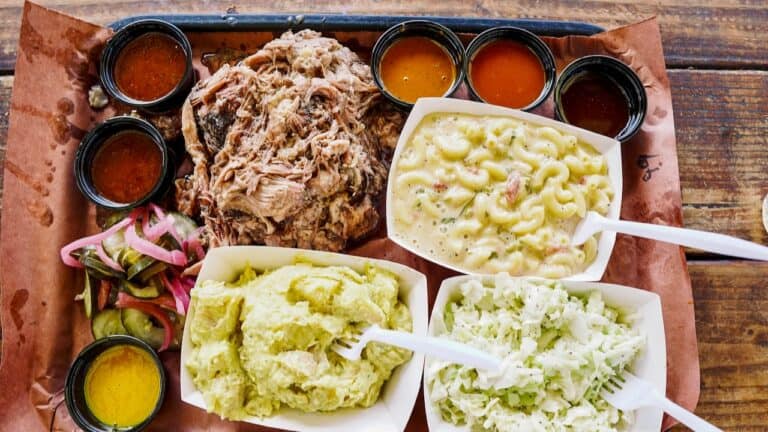
- Slow cooker pulled chicken dinner. Five pounds of chicken thighs (or ground beef for a chili variant) in a 6-quart slow cooker on low for 6 hours, shredded with a barbecue or salsa verde sauce. Pair with a tossed salad and crusty bread; the cooker holds at safe temperature for 2 hours of arrival staggering.
- Oven-baked spaghetti night. A 9×13 of bake spaghetti or stuffed shells with tomato sauce, served with garlic bread and a green salad. Pasta bakes in 35 minutes; salad and bread are room-temperature, so the host plates one dish at service.
- Build-your-own bowl bar. One large serving bowl of grain (rice or farro), one of greens, one of roasted portabella mushrooms or sweet potato, two protein options, and accompanying bowls of sour cream, salsa, and herbs. Guests assemble; the host refills — one of the most reliable crowd-pleasing dishes for a large crowd.
Each menu lands well below what chef-tested dinner parties assume — affordable enough for a working-family kitchen. The Kitchn’s casual dinner party menu for 10 takes the same shape, and Camille Styles’s dinner party menu ideas show how the same shapes adapt across seasons.
Each is one of the best inexpensive meals for groups this size — a meal option delivering a delicious combination of chicken, starch, and vegetable from one piece of cookware.
Why Format Beats Recipe for Easy Group Meals
These blueprints scale up the editorial logic of a dinner party menu built to plan a meal guests remember — same intent, larger guest count. Format choice removes the variability that makes meal planning hard: same grocery list, same cookware, same kitchen timing.
Picking the shape is one decision. Sizing the pan to the math is the question hosts ask most often when they’ve never cooked for 10 before.
|
Hosting Tip: Measure the Pan Before Shopping A 6-quart slow cooker on low needs 6 hours to break down chicken thighs into shreddable tenderness. Plug it in at 11 a.m. for a 7 p.m. service window, then switch to keep-warm at 5 p.m. — that gives a two-hour buffer for guests arriving in waves without the chicken drying out. The lid stays on; you stay out of the kitchen. |
What Pan Size Do I Need for One Main Dish That Feeds 10?
For one main dish feeding 10 without splitting across two pans, use either a 9×13 baking pan (8–10 portions of casserole, lasagna, or baked spaghetti) or a half-sheet pan at 13×18 inches (10 sheet pan recipe portions in one layer). Smaller forces a second pan; larger usually won’t fit a standard home oven — the limiting factor for most easy meals at this scale.
The math is geometry. A 9×13 holds 117 square inches at 2–3 inches depth — the volume for 10 servings of a sauce-bound easy meat dish or chicken pot pie at 1 cup per person. A half-sheet holds 234 square inches in one layer, the footprint for 10 protein portions with little effort once loaded.
- For layered casseroles, lasagna, baked spaghetti, enchiladas with crisp taco shells: one 9×13, baked at 375°F for 35–45 minutes covered, then 10 minutes uncovered for browning.
- For sheet pan dinners and easy weeknight dinners scaled up: one half-sheet at 13×18, roasted at 425°F for 25–30 minutes with vegetables in 1-inch dice and finished with olive oil.
- For braised mains, pulled meat, or bean chili: one 6-quart slow cooker or 7-quart Dutch oven; both yield 10 portions with minimal effort and hold without drying.
- For roasted whole proteins: a 9×13 fits a 4–5 lb whole chicken with sweet potato sides; a half-sheet handles a butterflied bird flat — an ideal dish for large family gatherings.
Outdoor and Two-Pan Adaptations
When a dish exceeds 9×13 capacity — a holiday lasagna with extra layers — bake two identical 9×13s on the same rack rather than searching for a commercial 12×20. Two 9×13s at 375°F bake in the same time as one.
PureWow’s 76 big-batch dishes for large groups shows which formats scale cleanly versus the type of meal that needs restaurant-grade pans.
An outdoor dinner relaxes the oven-space constraint entirely. Camille Styles’s 24 outdoor dinner party menu ideas lean on grilling and room-temperature sides, letting the host serve 10 from a portable cooler with a cool drink and one grill.
The beverage side is the same at smaller scale — a wine pairing menu for any dinner party works as a backbone for indoor and outdoor service.
Pan size is settled. The harder question is the timing chain — when each dish hits the oven, the table, and the guests.
|
Share Every Prep Task Clearly Dinner Notes is the free weekly newsletter from The Gourmet Host: every Thursday, a tested menu blueprint sized for groups of 8–12, with a printable shopping list and the kitchen-timing sequence. No recipe-blog filler. Just the menu, the math, and the host’s schedule. |
Smart Sequencing: How the Host Stays Out of the Kitchen at Service
Sequencing is the difference between a calm service and a frantic one. The rule that holds across every menu shape: anything that has to come out hot lands in the oven during the first 20 minutes guests arrive. Slow cooker holds; salad holds; bread holds. Hot main is the only thing tied to a clock at dinner parties this size.
- T-24 hours. Shop, prep proteins. Make cold sauces, vinaigrettes, or salsas. Wash salad greens; wrap in a kitchen towel in a sealed bag. Grocery stores run is one trip.
- T-3 hours. Slow cooker mains go on. Set the table fully — linens, glassware, water carafes filled. Pre-portion accompanying bowls of sour cream or salsa for the bowl bar.
- T-30 minutes (guests arriving). Casseroles or sheet pan recipe pans into a 375°F or 425°F oven. Crusty bread on the warm rack. Cocktail tray to the living room with a charcuterie board — the unique twist that signals dinner is on its way.
- T-0 (service). Pull the hot main, rest 5 minutes, plate. Salad to the table tossed at the last moment. The host carries one dish; everything else is already there.
An oven-only menu — when the slow cooker isn’t an option — runs on staggered bake times. Nomadette’s make-ahead oven dishes for hosting walks through staging: longest-bake dish goes in first; lower-temperature dishes hold in a 200°F warming zone.
The post-meal arc matters too — a curated coffee and tea selection closes a 10-person dinner the way a structured menu opens it, with quick dinner ideas reserved for nights you aren’t hosting.
The No-Oven Backup Menu
Sometimes the oven is broken, or it’s August and you don’t want to heat the kitchen. A stovetop and slow cooker menu — bean chili in a Dutch oven, pulled chicken in the cooker, salad and crusty bread — feeds 10 in 75 minutes with little work between courses.
PureWow’s 34 easy dinner party recipes include stovetop-first options scaled to 10 with one 7-quart pot.
Plan dinner around the cookware you own and the oven space you have on a Saturday afternoon, and 10 stops being the awkward middle. Half Baked Harvest’s 25 easy one-pan dinners everyone is making is a working library of one-pan recipes that prove the blueprint logic — fitting an entire menu into a single piece of cookware so the kitchen never gets overwhelmed.
The etiquette of attending a home dinner party rewards a host whose timing keeps the kitchen visible. Hosts who do this well aren’t cooking harder; they’re sequencing better.
Frequently Asked Questions
What pan size do I need to make one main dish for 10 people without dividing it across two pans?
Use a 9×13 baking pan for layered casseroles or baked pasta (8 to 10 portions) or a half-sheet pan at 13×18 inches for sheet-pan dinners (10 portions in one layer). Either fits a standard home oven and avoids the second-pan problem. Anything bigger usually won’t fit; anything smaller forces splitting.
How much pasta should I cook for 10 people if pasta is the main dish?
Cook 4 oz of dry pasta per person if pasta is the main dish, which works out to 2.5 lb dry total. The math says 2½ one-pound boxes for 10 people. If pasta is a side rather than the centerpiece, drop to 2 oz per person and buy 1.25 lb instead.
What’s a foolproof menu for 10 people if I’ve never cooked for that many before?
Slow cooker pulled chicken, a big tossed salad, and crusty bread is the no-fail menu for first-time hosts of 10. Timing is forgiving (the chicken holds for 2 hours), it scales linearly (5 lb thighs feeds 10), and it’s low-skill. Three components, one cookware piece, no last-minute plating.
How do I avoid overcooking the main when I’ve got 10 people standing around waiting?
Pull the main 5 to 10°F before its target temperature and let carryover cooking finish the job during a 10-minute rest. For roasts, this means pulling at 130°F for medium-rare beef. For braises and slow cooker mains, switch to keep-warm 30 minutes before guests sit down. It holds without drying.
Can I make a dinner for 10 people without using the oven if it’s broken or running another dish?
Yes. A stovetop and slow cooker menu (bean chili in a Dutch oven, pulled chicken in a slow cooker, salad and crusty bread on the side) feeds 10 in 75 minutes with no oven required. It’s also the right move in summer when you don’t want to heat the kitchen.
How early can I set the table for 10 if guests aren’t arriving for 4 hours?
Set the table the night before for everything except stemware. Water glasses and wine glasses get wiped and placed within an hour of arrival to avoid water-spotting from settled room dust. Linens, plates, flatware, and centerpieces all hold overnight. The 4-hour buffer becomes free time.
Continue Reading:
More On Cheap Family Meals & Crowd Cooking
- Cheap Easy Meals for Family on a Budget
- Large Group Meals for Stress-Free Entertaining
- Easy Meals for 20 People to Feed a Crowd
- Recipes for Large Groups Make Ahead Dinners
More from The Gourmet Host
- Family Conversation Starters That Spark Real Dinner Talk
- Elegant Infusions: Master Coffee and Tea for Your Next Dinner Party
- Italian Dinner Party Menu: A Complete Host’s Guide
- Easy Summer Appetizers Your Guests Will Actually Ask For
- Best Card Games for Your Next Dinner Party Night
Explore TGH Categories
- Set the Scene
- Drinks and Bar
- Plan the Meal
- Engage with Guests
- Games and Toasts
- Tools and Techniques
- Why We Gather