Home Bar Essentials: Every Bottle and Tool You Need to Start
 15 min read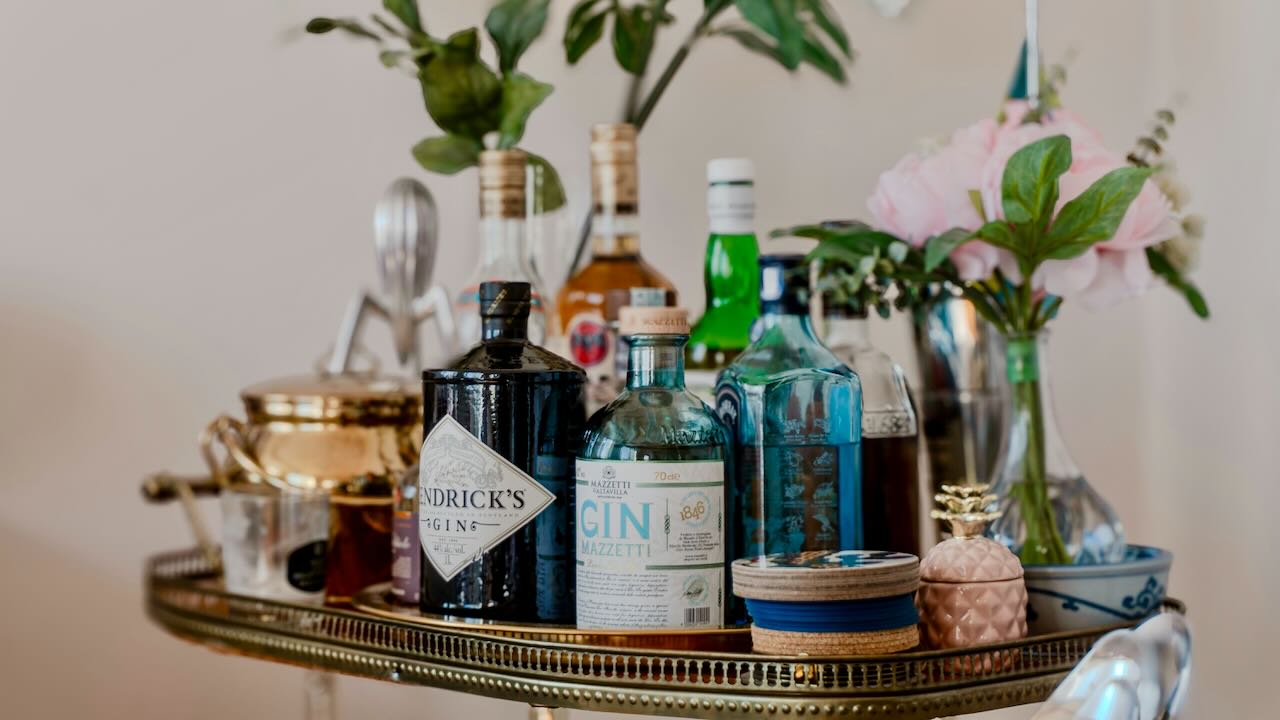
Your bar cart has three bottles, a corkscrew you stole from a restaurant, and a bag of limes slowly losing the will to live. Guests arrive in two hours. You know you need more — but every “essentials” list online reads like a wholesale liquor order, thirty bottles deep with no explanation of what actually gets poured at a party.
The real question is not how many bottles you own. It is which bottles, mixers, and tools work together so you can hand someone a well-made drink without disappearing into the kitchen for ten minutes. We help you organize your home bar essentials by what your guests will ask for first, what earns its shelf space over time, and which tools make the difference between fumbling and flowing through a night of hosting.
At a Glance
- Six base spirits cover roughly ninety percent of the cocktails guests request at home gatherings.
- Three to four liqueurs and modifiers turn a basic pour into a drink people remember ordering.
- Fresh citrus, quality tonic water, and a few shelf-stable mixers matter more than a crowded garnish tray.
- A cocktail shaker, jigger, bar spoon, and strainer handle nearly every recipe a home host will make.
- Four glass styles — rocks, highball, coupe, and wine — serve the full range of drinks without cluttering your shelves.
- Buy in tiers: start with what you drink, add what your guests drink, then expand for variety.
What Is a Home Bar Essentials List?
Home bar essentials is curated set of spirits, liqueurs, mixers, tools, and glassware that lets a host make a wide range of cocktails and drinks without overbuying. Unlike a professional bar inventory built for hundreds of orders a night, a home essentials list is sized for gatherings of four to twelve guests with varied tastes. The difference between a useful essentials list and a generic shopping list is organization — grouping bottles by how they work together in recipes rather than alphabetically on a shelf.
Which Spirits Actually Earn Their Place on Your Bar?
Every home bar essentials list starts with base spirits, and for good reason — they are the foundation of virtually every cocktail your guests will request. The six essential liquors that stock professionals keep on hand (vodka, gin, rum, tequila, whiskey, and brandy) cover the backbone of classic cocktails from an Old Fashioned to a Daiquiri.
But buying all six at once is not the smartest approach for someone stocking a first home bar. Start with the spirits you actually drink, then fill gaps based on what your guests tend to order.
The key is matching your purchases to real hosting scenarios. If your Friday nights lean toward cocktail parties with varied tastes, vodka and gin should arrive first. If you host dinner gatherings where a single spirit carries the evening — a bourbon Manhattan alongside steak, a rum punch with Caribbean food — let the meal guide the bottle. A tiered buying strategy lets you spread the cost over weeks instead of dropping hundreds of dollars in a single trip.
- Vodka — The most versatile spirit in your collection, vodka works in everything from a Bloody Mary to an Espresso Martini. Stock a clean, mid-shelf bottle and you will cover more guest requests than any other single purchase.
- London dry gin — Juniper-forward and herbaceous, dry gin is essential for Gin and Tonics, Negronis, and classic Martinis. One bottle handles both stirred and shaken cocktails without needing a second style.
- White rum — Light and slightly sweet, white rum is the backbone of Mojitos, Daiquiris, and rum punches. For hosts who entertain in warmer months, this bottle earns its shelf space quickly.
- Dark rum — Richer and more complex than its lighter sibling, dark rum brings depth to tiki drinks and pairs well with ginger ale for a simple two-ingredient serve. Keep one bottle alongside your white rum for range.
- Bourbon — Warm, vanilla-rich, and approachable, bourbon anchors the Old Fashioned and the Whiskey Sour. A mid-priced bottle doubles as a sipping whiskey when guests prefer theirs neat.
- Blanco tequila — Clean agave flavor makes blanco tequila the right pick for Margaritas, Palomas, and simple tequila-soda serves. Skip aged expressions until you know your crowd wants them.
- Irish whiskey — Smoother and lighter than bourbon, Irish whiskey appeals to guests who find American whiskey too forward. It is a smart second whiskey once your basic spirits are covered.
A bottle of brandy rounds out the full set of base spirits, but it can wait — unless you are hosting a crowd that requests Sidecars or brandy-based after-dinner drinks, its turn comes later.
|
Keep the Drink Plan Together |
Liqueurs and Modifiers That Turn Basic Drinks Into Requests for Seconds
Base spirits get you started. Liqueurs and modifiers are what make guests say “what’s in this?” and ask for another round. These bottles sit behind the scenes in most cocktail recipes, adding sweetness, bitterness, or herbal complexity that a spirit alone cannot deliver.
You do not need a dozen — a focused selection of five or six covers the recipes that come up again and again at home gatherings.
Think of modifiers as the seasoning shelf of your bar. Just as salt and acid transform a flat dish, a dash of bitters or a pour of dry vermouth transforms a flat drink. The trick is buying modifiers that pull double or triple duty across recipes, so nothing collects dust behind your favorite drinks.
If you are building a personalized space around what you actually serve, start here.
- Triple sec (orange liqueur) — Sweet, citrus-bright, and essential for Margaritas, Cosmopolitans, and Sidecars. An almond-flavored liqueur like amaretto is a fine luxury, but triple sec earns its spot first because it crosses more recipes.
- Dry vermouth — A fortified wine that is non-negotiable for a proper Martini and useful in dozens of stirred cocktails. Buy small bottles — vermouth oxidizes after opening, so store it in the refrigerator and replace every six to eight weeks.
- Sweet vermouth — Rich, herbal, and slightly bitter, sweet vermouth anchors Manhattans, Negronis, and Boulevardiers. The flavor difference between a fresh bottle and one that has been open for months is dramatic, so treat it like wine.
- Angostura bitters — A few dashes define an Old Fashioned, a Manhattan, and a dozen other cocktails. One small bottle lasts a year or more because you measure in drops, not ounces.
- Simple syrup — Equal parts sugar and water, heated until dissolved, cooled, and bottled. Homemade simple syrup costs almost nothing and dissolves instantly in cold drinks, unlike granulated sugar. Keep a bottle in the refrigerator at all times.
- Coffee liqueur — Dark, sweet, and roasted, coffee liqueur is the backbone of an Espresso Martini and a White Russian. It appeals to guests who lean toward dessert-style drinks, which makes it a strong addition once your base is covered.
- Irish cream liqueur — Creamy, sweet, and whiskey-laced, Irish cream is one of the most requested after-dinner drinks at home gatherings. Serve it over ice, stir it into coffee, or layer it into a shooter — it disappears quickly when guests spot it on your shelf.
One good rule: if a liqueur appears in three or more recipes you plan to make, it belongs on the shelf. If it appears in one, hold off until that one recipe justifies the cost. Your batch cocktails will also tell you which modifiers you reach for most — that is real usage data, not a shopping list someone else wrote.
|
Hosting Tip: Refrigerate Vermouth After Opening |
Mixers and Garnishes Your Guests Will Notice Before the First Sip
A cocktail is only as good as what goes in alongside the spirit, and mixers account for the majority of volume in most drinks. The wrong tonic water or a carton of juice past its prime will flatten even a well-chosen gin.
Stock your mixers with the same intention you give your spirits — a few quality staples outperform a cluttered shelf of half-empty bottles every time.
Garnishes serve two purposes: they add aroma the moment a guest lifts the glass, and they signal that the drink was made with care. A lime wheel on a Gin and Tonic or a sprig of fresh herbs on a Mojito takes three seconds and changes the entire experience.
Keep your garnish list short and seasonal — citrus fruits, olives, and one fresh herb cover nearly everything.
- Tonic water — Crisp and slightly bitter, quality tonic water is the single mixer that makes or breaks a Gin and Tonic. Avoid generic brands with artificial sweeteners — the difference is obvious from the first sip.
- Club soda — Neutral and effervescent, club soda stretches highballs, adds sparkle to whiskey serves, and gives non-alcoholic beverages a cocktail-like feel. Buy small bottles or cans so the carbonation stays sharp.
- Orange juice — Freshly squeezed or not-from-concentrate, orange juice is the mixer behind Screwdrivers, Tequila Sunrises, and brunch-style cocktails. One carton covers a full evening of hosting.
- Fruit juices (cranberry, pineapple, grapefruit) — These three cover the tropical and tart range of cocktails from Sea Breezes to Palomas. If space is limited, cranberry and grapefruit handle the most recipes.
- Ginger ale and ginger beer — Sweet and spicy, ginger ale mixes with dark rum or whiskey for an easy two-ingredient drink, while ginger beer adds the sharper bite needed for a Moscow Mule or Dark ’n’ Stormy.
- Lemons and limes — Fresh citrus fruits are non-negotiable. A squeeze of lemon juice brightens a Whiskey Sour; lime juice is essential for Margaritas and Daiquiris. Buy whole fruit and squeeze to order — bottled juice tastes flat by comparison.
- Olives and cocktail cherries — Olives belong in a Martini; cherries belong in an Old Fashioned and a Manhattan. These two garnishes cover the most commonly requested finishing touches at a home bar.
- Fresh herbs (mint, rosemary) — A handful of fresh mint turns rum and lime into a Mojito. A sprig of rosemary, briefly torched with a lighter, releases a piney smoke that makes a gin cocktail feel like a crafted experience. If you are looking for easy party cocktails that look impressive, fresh herbs do more visual work than any other garnish.
Keep your non-alcoholic drinks covered too. Guests who are not drinking alcohol still want something better than tap water — a sparkling water with muddled cucumber and lime, or a tonic with bitters over ice, signals that you thought about them before they walked through the door.
|
Share Every Prep Task Clearly |
The Glassware and Tools That Make Hosting Look Effortless
Glassware and bar tools are where home bar essentials stop being a shopping list and start feeling like a hosting station. The right glass shapes a drink’s aroma, temperature, and visual appeal. The right tools let you make that drink consistently without second-guessing measurements or struggling with ice.
You do not need a wall of specialty equipment — four glass styles and five tools handle virtually everything.
Start with glassware that serves the drinks you already make, then add pieces as your cocktail menu grows. A rocks glass and a highball glass cover eighty percent of serves.
If you are someone who enjoys pairing drinks and bites for seated dinners, a set of wine glasses and coupes rounds out the collection.
- Rocks glass (Old Fashioned glass) — Sturdy, wide-brimmed, and built for spirits served over ice, the rocks glass is the workhorse of a home bar. It handles an Old Fashioned, a Negroni, and a neat pour of whiskey without needing anything else.
- Highball glass — Tall and slim, the highball is designed for long drinks like a Gin and Tonic, a Mojito, or a simple whiskey and club soda. Its shape keeps ice submerged and carbonation lively.
- Coupe glass — Elegant and versatile, the coupe replaced the traditional Martini glass in most modern bars because it is harder to spill and easier to hold. Use it for Martinis, Manhattans, Daiquiris, and any cocktail served up.
- Wine glasses — A set of medium-bowled wine glasses covers both red and white pours. If you host guests who prefer wine over cocktails, these glasses see more use than anything else on your shelf.
- Cocktail shaker (cobbler or Boston) — The tool that makes you a drink-maker instead of a drink-pourer. A cobbler shaker has a built-in strainer and works well for beginners; a Boston shaker pairs a metal tin with a pint glass for faster, higher-volume mixing.
- Jigger — A double-sided measuring tool, typically one ounce on one side and two on the other, that gives you precise measurements for balanced cocktails. Eyeballing pours is the fastest way to ruin a drink.
- Bar spoon — Long, slender, and lightly weighted, a bar spoon stirs Manhattans and Martinis without over-diluting them the way shaking would. It also reaches the bottom of a tall glass to layer ingredients.
- Hawthorne strainer — A spring-coiled strainer that fits over a shaker tin to hold back ice and pulp when you pour. If your cobbler shaker has a built-in strainer, this is your second priority — but for a Boston shaker, it is essential.
- Martini glasses — If your crowd specifically requests the classic V-shaped Martini glass, keep a pair on hand. But for most gatherings, the coupe glass already covers this role and is more forgiving to carry across a room.
- Citrus juicer — A handheld press that squeezes lemons and limes in seconds. Fresh citrus fruits make a measurable difference in cocktail flavor, and a good juicer removes the seeds and pith in one motion. If you keep a well-stocked kitchen already, you may have one — bring it to the bar.
The glassware and tools above represent a complete starting kit — not a lifetime collection. As your drink menu expands, you will find reasons to add shot glasses for tasting flights, a muddler for herb-forward drinks, or a dedicated set of appliances like a portable ice maker. But the goal of any essentials list is to get you hosting confidently with what you have, not waiting until your bar looks like a catalog page.
The best home bar is the one where you know exactly where everything is, what every bottle does, and how to make a guest’s favorite drink without hesitating.
Frequently Asked Questions
What should every home bar have?
Every home bar needs at least three base spirits (vodka, gin, and one brown spirit like bourbon), a bottle each of dry and sweet vermouth, fresh citrus, tonic water, a cocktail shaker, and a jigger. These cover the most commonly requested cocktails and let a host serve confidently without overbuying.
What mixers should I keep stocked at my home bar?
Tonic water, club soda, orange juice, cranberry juice, ginger ale, and simple syrup handle the widest range of recipes. Buy small bottles of carbonated mixers to preserve fizz, and keep fresh lemons and limes on hand for citrus-forward drinks that make up the majority of cocktail requests.
How much should a starter home bar cost?
Around two hundred covers six bottles, basic tools, and glassware if you buy sensibly. Spend on the spirits you drink neat and save on anything going into a mixed drink. Building it over three months rather than one weekend spreads the cost and avoids bottles you never open.
How do I stock a bar for beginners?
Start with a single bottle each of vodka, gin, and bourbon, three spirits that anchor the widest variety of popular cocktails. Add one mixer per spirit (tonic, club soda, ginger ale), a bottle of simple syrup, and fresh limes. This foundation costs under a hundred dollars and lets you make a dozen different drinks.
What garnishes should I have for a home bar?
Lemons, limes, olives, and cocktail cherries cover the garnish needs of most home bar recipes. Fresh mint is a strong addition if you serve Mojitos or julep-style drinks. Buy citrus fresh the day of your gathering when possible. The oils in the peel release more aroma when they have not been sitting in a crisper for a week.
What glassware do I need for a home bar?
Four styles handle nearly everything: rocks glasses for spirit-forward cocktails, highball glasses for long drinks, coupe glasses for shaken or stirred-up serves, and wine glasses. A set of four in each style gives you enough for most home gatherings without requiring extra cabinet space.
Continue Reading:
More On Home Bar Setup & Design
- Bar Tools Every Home Host Needs for Better Drinks
- How to Set Up a Home Bar for Hosting That Actually Works
- Outdoor Bar Ideas on a Budget: Build a Backyard Bar for Less
- Wet Bar vs Dry Bar: Which Setup Fits Your Home?
More from The Gourmet Host
- Party Food Platters: Build Boards for Any Gathering
- The Art of After-Dinner Speeches: Tips for Speaking
- Small Gifts That Will Make Your Dinner Party Guests Feel Special
- Birthday Dinner Ideas for a Home-Cooked Celebration
- A History of Communal Dining Experiences (& How To Create Your Own)
Explore TGH Categories
- Set the Scene
- Drinks and Bar
- Plan the Meal
- Engage with Guests
- Games and Toasts
- Tools and Techniques
- Why We Gather