6 Dice White Elephant Game Rules for Better Swaps
 15 min read

Planning a dice white elephant game keeps your guests laughing while maintaining the elegant dinner logistics you worked hard to build. Wrapping up a great meal with an interactive gift exchange keeps the energy high at the table.
This guide gives you six specific dice rules to structure the activity. You will learn exactly how to manage the swap mechanics and integrate the game with your hosting duties. Your gathering of friends will enjoy a well paced evening of friendly competition.
A clockwise turn order gives every active player a turn.
At a Glance
- Rolling a one forces a quick swap to keep highly desired items moving rapidly around the room.
- Rolling a two initiates a complete leftward shift of all presents to break up strategic hoarding immediately.
- Stealing gifts on a three creates the classic interaction guests expect from these holiday exchanges.
- Bringing new items into play on a four expands the pool of available goods for everyone.
- Reversing the pass direction on a five disrupts any players trying to track specific boxes.
What a dice white elephant game means for your dinner party
A dice white elephant game is a structured gift exchange where guests roll a standard six sided die to determine what action they take on their turn. It differs from the standard format because players do not simply choose between unwrapping a new box or stealing from a neighbor. The die determines whether active guests pass or swap gifts, exchange for an opened gift, unwrap their own gift, or protect it in the house version below.
This format works incredibly well for home hosts managing four to twelve guests. The difference between a standard format and this setup is the rigid structure that removes the pressure of decision making and relies purely on chance.
If you want to know 7 Rules: What is a White Elephant Gift Game?, you generally ask guests to bring a wrapped, amusing item. Incorporating a die adds a rigid schedule that prevents the activity from dragging on while you clear dinner plates.
You might also read up on 7 Rules for the White Elephant Game for Party Hosts to understand the baseline mechanics before adding the dice element. Using dice gives everyone a fair shot at the top items.
| Dice Roll | Required Player Action | Game Impact |
|---|---|---|
| One | Swap current gift with another active player | Forces sudden changes in ownership |
| Two | Active players pass to the next active neighbour on the left | Shuffles the entire playing board at once |
| Three | Exchange your gift for an eligible opened gift | Creates direct competition for popular goods |
| Four | Unwrap your current gift; roll again if already open | Reveals a gift already held by a player |
| Five | Active players pass to the next active neighbour on the right | Reverses previous physical passing directions |
| Six | Lock your opened gift; reroll if it is wrapped | Adds a defensive layer to the gift exchange |
Before the first roll, give each participant one wrapped gift at random and seat them in a circle. Keep one gift per player throughout this house version.
- Set the turn order: Take turns clockwise, rolling once per active player. Reroll if a move has no eligible target.
- Exclude protected gifts: A locked gift and its owner sit out all swaps and group passes; the remaining active players pass to the next active neighbour.
- Keep one gift each: A steal means exchanging your current gift for an eligible opened gift, not leaving another player empty-handed.
- Finish the round: Once every gift is opened, finish the current clockwise round and end the exchange; everyone keeps the gift they hold.
Roll a One: Swap Your Gift With Anyone
Rolling a one allows the active player to instantly swap their current gift with any other player holding a gift. It forces early interaction, prevents players from getting too comfortable with their items, and ensures that highly desired items move rapidly around the room.
Keep the first swap easy to follow:
- Break the ice: This works because it breaks the ice instantly among your guests.
- Keep gifts moving: When someone lands a coveted item, a quick roll of a one means they might lose it right away.
- Limit deliberation: This unpredictability keeps everyone engaged and watching the dice carefully. You want to keep the momentum going rather than letting players deliberate for minutes over who to target.
If you need White Elephant gift ideas for your party, encourage items that spark immediate conversation.
Funny mugs or quirky kitchen gadgets make excellent targets for a fast swap.
A swift exchange turns a quiet group into a lively crowd instantly. To keep guests energized during these quick exchanges, consider your beverage service carefully.
Offering a small drink can loosen up the room without overwhelming anyone.
Wine Folly recommends serving Port wine in 3 ounce portions at a temperature between 55 °F and 68 °F.
A small pour pairs wonderfully with the fast paced nature of the swaps. If you also plan party games for adults at gatherings, you can transition into those right after this gift exchange concludes.
Actionable step: Provide a physical timer and give the active player exactly ten seconds to choose their swap target to keep the game’s momentum high.
|
Prepare before the first roll |
Roll a Two: Everyone Passes Their Gift Left
A roll of two initiates a group wide pass to the left. Every active guest must hand their current gift to the next active neighbour on the left, completely shuffling the board and unexpectedly changing everyone’s fortunes in a single, chaotic turn.
This rule moves gifts among active players; protected gifts remain with their owners.
Passing gifts to the left requires a physical layout that accommodates physical movement.
Guests sitting at a long rectangular table might struggle to pass items quickly. You want a setup where the flow remains uninterrupted and natural.
If you plan to incorporate fun icebreaker questions for dinner party chats into your evening, ask one question every time a two is rolled.
This breaks up the passing action with a brief moment of laughter.
Passing items often causes a bit of a commotion, so keeping the mood light is key. When setting up your space, ensure the room feels comfortable and well lit.
If you offer cocktails while guests pass their presents, you want the drinks perfectly mixed to impress.
Difford’s Guide defines a classic ‘Wet’ Dry Martini as using a 2:1 ratio of gin to dry vermouth.
Handing out a properly balanced drink right as the gifts shift left adds an elegant touch to the chaos. Mixing the game with fun icebreaker questions for dinner party chats during the passes keeps the energy peaking.
Actionable step: Arrange your guest seating in a tight, unobstructed circle so that passing fragile or heavy items is completely safe and efficient.
Roll a Three: Steal an Opened Gift
Explain the stealing phase before play:
- Make steals playful: Rolling a three permits the player to steal any unwrapped present from another guest. This is the classic competitive element that makes these exchanges so memorable, exchanging the active player’s gift with the selected eligible gift before the clockwise turn order continues.
- Watch new reveals: Stealing presents creates the core drama of a dice white elephant game.
- Set clear boundaries: When a highly sought after item gets unwrapped, the tension in the room naturally rises.
- Choose appealing gifts: Every roll of a three shifts the power dynamics in the room. Setting clear boundaries on steals prevents hurt feelings and keeps the activity moving forward.
If you need inspiration for items that people will actively try to steal, look at White Elephant gift ideas for your party for suggestions.
Funny, slightly impractical items tend to draw massive attention from the players.
You want items that guests will playfully fight over rather than ignore. To complement the competitive stealing phase, serve a small snack to keep hands busy.
If you offer a dip, presentation matters heavily for hungry guests.
Love and Lemons recommends adding citrus juice to the top layer of leftover guacamole to prevent browning caused by oxidation.
A fresh bowl of guacamole keeps players fueled for their next big steal. If you want more structured activities after the gifts are done, consider party games with cards for adults.
Card games transition exceptionally well from the stealing mechanics. Incorporating fun icebreaker questions for dinner party chats also works well for the newly robbed player before they roll again.
Actionable step: If using a three-steal limit, lock the gift on its third steal and remove its owner from further moves; the stated end condition still controls the finish.
|
Hosting Tip: settle gift protection before play. |
Roll a Four: Unwrap a New Gift
A four lets the player unwrap the gift they currently hold; if it is already open, roll again. This reveals more items for possible exchanges for others to target, expanding the pool of available goods during your active dice white elephant game.
Unwrapping new gifts is crucial for keeping the exchange completely unpredictable.
The pile of unknown items represents pure potential for the competitive players.
As a host, you must clearly separate game contributions from actual host gifts given to you upon arrival. The Emily Post Institute defines a hosting gift as a small token of appreciation given to a host, which the host is not expected or required to serve during the event.
Remind guests to keep their game contribution in the pile while handing host gifts directly to you.
Keeping the unwrapping process organized makes your hosting job easier.
You might even bake cookies to serve while guests tear into the wrapping paper. If you bake, measurement accuracy is strictly vital for a great result.
King Arthur Baking specifies that 1 cup of all purpose flour weighs 120 grams or 4 1/4 ounces.
Serving perfectly measured treats adds a polished element to the game unwrapping phase.
If you need to stall while guests unwrap complicated packaging, pose small-group icebreaker questions. This keeps the rest of the circle totally entertained.
You can also integrate Christmas gift exchange and White Elephant games into the unwrapping phase to dictate who cleans up the discarded paper.
Actionable step: Designate a specific table in the center of your gathering space solely for wrapped game contributions to avoid confusion with personal host gifts.
Roll a Five: Everyone Passes Their Gift Right
A five triggers a group pass to the right among active players, excluding protected gifts and their owners. This immediately reverses the flow of a previous left pass, creating immediate chaos. It rapidly breaks up strategic gift hoarding by sending every unwrapped item back in the complete opposite direction.
Passing to the right disrupts anyone who thought they had a firm grip on a prized item, as the sudden reversal of direction requires all guests to pay close attention and guarantees that the layout of the game shifts constantly throughout the night.
Music acts as a natural timer for this mass movement of boxes and effectively masks the rustling of wrapping paper and shuffling of packages. If you serve mixed drinks to keep the mood festive, you might need a simple sweetener.
Difford’s Guide notes that 2:1 rich sugar syrup measures 65.1° Brix compared to 48.0° Brix for 1:1 simple syrup. A richer syrup gives your party cocktails a better texture during the lively passing rounds.
If you host during the winter months, Christmas party games for adults and big groups naturally fit alongside this rapid gift pass.
A right pass also gives you a great window to ask How to Ask Good Icebreaker Questions: A Host’s Playbook since everyone is momentarily distracted. Keeping guests talking prevents the passing from feeling entirely mechanical.
Actionable step: Play an upbeat holiday song in the background, but make only one rightward pass when a five is rolled.
Roll a Six: Protect Your Present
Rolling a six grants the active player protection for the opened gift they currently hold; reroll if it is still wrapped. This defensive move rewards a lucky roller and adds a protective strategy to the exchange.
Allowing players to lock an item adds a highly satisfying layer of strategy to the event that brings immense relief when a guest finally secures something they genuinely love, beautifully balancing out the constant stealing and passing mechanics seen in earlier turns. Clear visual markers prevent arguments about which items are safe from thieves.
This defensive rule works particularly well if you plan Games to play with friends without anything: The Rules later in the evening, as it establishes a precedent for friendly, clear rules.
A locked gift stays firmly with that player until the very end.
If you serve dessert as the game winds down, your ingredients need to be prepped properly in advance. King Arthur Baking defines standard room temperature for baking ingredients as 68 °F to 75 °F.
Pulling your butter out early ensures a fantastic cake to celebrate the end of the dice white elephant game. To transition to dessert smoothly, you can use 50 Icebreaker Questions for Adults at Dinner Parties to pivot the conversation away from the gifts.
For smaller intimate gatherings, 7 Fun Games For Couples Online To Host A Double Date offer a nice follow up activity for those joining remotely.
Actionable step: Hand out physical “immunity tokens,” such as festive cocktail stirrers, so everyone can clearly see which opened item is locked and no longer joins passes or swaps.
|
Close out shared expenses |
How The Gourmet Host Helps You Plan Party Games
Managing interactive activities while finalizing a group dinner can easily overwhelm any host who has a detailed menu to execute, drinks to pour, and guests to entertain simultaneously.
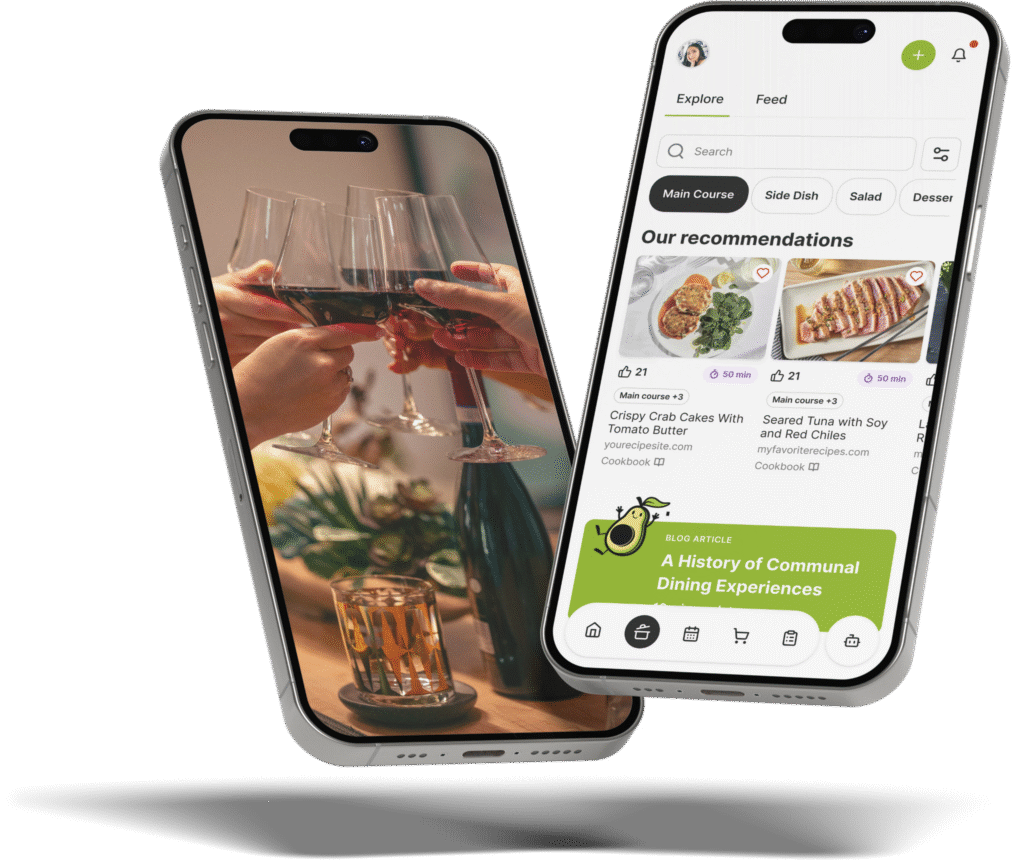
The Gourmet Host mobile app simplifies the logistics before the party even starts. You can build the shared menu, collect RSVPs and organize grocery and task lists on an interactive event page.
Clear communication upfront prevents awkward moments at the door when friends arrive, which is why The Emily Post Institute recommends that hosts include the date, time, location, occasion, host name, and response instructions on party invitations.
The Gourmet Host sends invitations by email or SMS so guests can review the event details and RSVP. Confirm the gift spending limit with participants before the gathering.
The shared event plan keeps your menu, RSVPs and planning tasks together.
Review guest dietary notes when you choose the shared menu.
Dietary restrictions and notes appear with RSVPs for host review. You start with hundreds of recipes from professional test kitchens, then search recipes from across the web and jump straight to the original source.
You do all this effortlessly without leaving the App.
You can also share the hosting duties to save time.
The platform makes it easy to invite co hosts, assign dishes, and split costs fairly. Once the dice white elephant game wraps up, the cost splitter simplifies post party logistics so you can focus on reliving the fun.
Review logged expenses and each participant’s spending and balance after the event. Explore thegourmethost.com to build your next menu, track your RSVPs, and keep your guests laughing.
Actionable step: Use the app’s RSVP tracker to confirm the exact number of participating guests so you know exactly how many wrapped gifts you need, one per participant.
Frequently Asked Questions
How many dice are needed for a dice white elephant game?
This house version needs one standard six sided die. A single die keeps the rules simple and the probabilities entirely straightforward. Two dice would need a different rules chart; their sums range from two to twelve. A single die allows you to clearly assign one specific action to each number on the board.
Do players open gifts before or after rolling the dice?
Players roll the die first and then carefully follow the corresponding rule. The roll dictates whether they unwrap their current gift, exchange for an opened one, or pass items around the circle. Rolling first builds great anticipation because guests do not know what action they will take until the die stops spinning completely.
How long does a typical gift exchange with dice last?
Allow thirty to forty five minutes for eight to ten guests, adjusting for your group. The pace depends entirely on how quickly players choose their targets for steals or quick swaps. Setting firm time limits on decision making keeps the event moving rapidly. This ensures the activity fits nicely between your main course and dessert service.
What happens if a player rolls to unwrap but no wrapped gifts remain?
In this house version, a four opens the gift the player already holds. If that gift is open, roll again rather than looking for a centre pile. Once all gifts are opened, finish the current clockwise round and end the exchange; protected gifts stay with their owners.
What is the ideal guest count for a dice gift exchange party?
The ideal group size ranges from four to twelve guests for maximum enjoyment. Fewer than four players limits the available pool of gifts and severely reduces the excitement of stealing. More than twelve guests can cause the game to drag on for over a full hour. A medium sized group provides enough variety without losing momentum.
How should hosts manage wine service during the game?
Serve drinks right before the game begins to avoid navigating around people passing boxes. For bottles held for later, follow the storage guidance below. Wine Folly states that the ideal temperature range for storing wine is 55 °F to 59 °F at 55% to 75% humidity. Offer an alcohol-free choice too.
Continue Reading:
More On Party Games and Icebreakers
- How to Ask Good Icebreaker Questions: A Host’s Playbook
- Games to play with friends without anything: The Rules
- Icebreaker Questions For Teenagers: The Full Party Guide
- 7 Minute to Win it Games for Teens to Host
- Family Game Night Games Ideas: The Full Hosting Guide
More from The Gourmet Host
- 50 Fun Icebreaker Questions for Dinner Party Chats
- 50 Icebreaker Questions for Adults at Dinner Parties
- 7 Rules for the White Elephant Game for Party Hosts
- 15 Party Games With Cards for Adults
- 20 White Elephant Gift Ideas Your Guests Will Love
Explore TGH Categories