Food for a Crowd: Easy Menus to Feed a Big Group
 18 min read
Feed a big group without the day-of scramble by anchoring on one make-ahead main, scaling every other dish off a per-guest number, and running the clock backward from serving time.
Pick one main that holds in a warm oven, and half the crowd-cooking problem solves itself. A braise, a baked pasta, or a slow cooker of pulled pork buys you an hour of slack, because it does not care whether guests arrive at 6:00 or 6:40.
That single choice decides whether you spend the night at the stove or at the table. It is the move that is easy to skip when the menu feels urgent, and the one that makes the difference.
This guide hands you the per-guest math, the build sequence, and the make-ahead windows to plan food for a crowd of any size, from a casual dinner for eight to a holiday table for twenty.
At a glance:
- Quantity: roughly one pound of food per adult total, split across main, sides, and salad.
- Structure: one hot make-ahead main, two room-temperature sides, one green salad, and bread.
- Make-ahead window: braises and casseroles hold two to three days; salads one day; reheat the day of.
- Budget: about six to nine dollars per head for a casual buffet built on one affordable protein.
- Safety: hold hot food above 140F, cold below 40F, and nothing out longer than two hours.
Food for a Crowd: The Short Answer
Easy food for a crowd runs on one rule: plan about one pound of food per adult total, built around a single main that holds well, then fill the plate with two or three cheaper sides. Cook the main ahead, keep it warm, and let guests serve themselves. Work backward from serving time so nothing lands late and nothing needs your hands at the last minute.
Feed a Big Group on One Rule, Scaled by the Pound
The best easy party food ideas for a crowd start with one hold-well main, not a stack of showpiece dishes. The right food to make for a crowd is anything that reheats cleanly, because a dish you can hold buys you the whole evening.
The mental model to carry through the rest of this piece is a countdown, not a recipe. You are not collecting dishes. You are working backward from serving time so nothing lands late.
Think of the night as a timeline that curves from three days out to the moment you sit down. Each stage does a slice of the work so the final hour stays calm.
- Days out: make the braises, sauces, and casseroles that deepen with a rest in the fridge.
- The day before: mix salads, chop vegetables, and bake anything that reheats cleanly.
- Morning of: run the final reheats and pull cold dishes out to wake up their flavor.
- Serving time: plate, refill in small batches, and pour drinks instead of scrambling.
That timeline is why a make-ahead main beats a showpiece you have to babysit. A dish that reheats gives you slack, and slack is what lets you host instead of cook.
Count the Guests Before You Pick a Single Dish
The instinct is to start with dishes: scroll a few feed crowd recipes, pin the pretty ones, and hope the quantities work out. That order is backward, and it is why hosts end up with four hot dishes and one oven at 5:45.
Start with the number of guests and the clock instead. Once you know you are feeding sixteen and want to sit down at 7:00, the menu comes down to three choices: one main that scales, sides that hold, and a plan spread across a few days.
Cheap does not have to mean thin. A menu built on one bulk protein stretched with rice, beans, or pasta feeds everyone well, and that logic is behind the best cheap dinner ideas company cooks lean on.
- It fixes your grocery total before you fall for a recipe you cannot scale.
- It tells you how many burners and how much oven space the meal really needs.
- It surfaces the gaps early, so a vegetarian or a nut allergy shapes the plan, not the panic.
Pick the frame first, then the food. A headcount and a serving time are the two facts that turn a vague worry into a plan you can shop from.
Run Five Decisions in Causal Order
Run these five choices in sequence. Each one narrows the next, so by the end the shopping list is obvious.
From Headcount to Anchor Main
Count the plates, then the pounds. Multiply adults by one pound, count kids as half, and add ten percent for big eaters and seconds. Sixteen adults means roughly seventeen to eighteen pounds of food total.
Choose the anchor main next. Pick one protein that holds well: pulled pork, a big baked pasta, chili, a glazed ham, or sheet-pan chicken thighs.
Hold-well is the only requirement that matters, because a main that dries out at 6:15 undoes every other good decision. Lean on an affordable cut and one of the inexpensive meals for large groups that scale without fuss.
From Sides to Serving
Add two sides and a salad. Pick one starch, one vegetable, and one green salad, choosing two that sit happily at room temperature. A tray of rice and roasted vegetables covers a crowd for a few dollars.
Set the make-ahead calendar next. Braises, sauces, and casseroles get made two to three days out, while salads and dressings hold one day if kept separate. The day of, you reheat and plate, nothing more.
Plan the serve last. Decide buffet or plated, which for more than eight is almost always a buffet, and set out a self-serve drink station. Pick one easy dessert you finished the day before, like a sunday-simple crowd-pleaser that needs no last-minute work.
- Count: adults times one pound, kids as half, plus ten percent for seconds.
- Anchor: one hold-well main that reheats without drying out.
- Sides: one starch and one vegetable that sit fine at room temperature.
- Calendar: braises three days out, salads one day out, reheats the morning of.
- Serve: buffet over plated past eight, plus a self-serve drink station.
Work the five in that order and the shopping list comes together from your answers. Each decision removes a variable, so by the fifth you are choosing serving details, not staring at a blank menu.
|
Build the Crowd Menu Before Shopping |
Shop Straight From Per-Person Quantities
The math below is the fast way to turn a headcount into a cart. Round every line up, because leftovers cost far less than a guest who leaves hungry.
Here is the per-guest math scaled to four common headcounts.
| Guests | 8 | 16 | 25 | 50 |
|---|---|---|---|---|
| Total food (lb) | 8 | 16 | 25 | 50 |
| Make-ahead main (lb) | 4 | 8 | 12 | 25 |
| Two sides combined (lb) | 2.5 | 5 | 8 | 16 |
| Green salad (lb) | 1.5 | 3 | 5 | 9 |
| Bread (loaves) | 1 | 2 | 3 | 5 |
| Buffet budget ($6-9/head) | $50-70 | $95-145 | $150-225 | $300-450 |
Scaled from the article’s rule of about one pound of food per adult total; the split across the plate is a suggested allocation, and budget uses the article’s six to nine dollars per head.
- Total food: about one pound per adult, roughly twelve pounds for twelve guests.
- Cooked main protein: five to six ounces per adult, near four and a half pounds for twelve.
- Starch side: four to five ounces cooked per adult, about three and a half pounds for twelve.
- Vegetable side: four ounces per adult, so three pounds for a table of twelve.
- Bread and dessert: roughly one and a half pieces of bread and one dessert serving each.
For a buffet, offer three to four options so guests build a plate, and expect the popular main to go faster than the math predicts. When cost is tight, more of the plate should be cheap sides, a trick every list of cheap recipes to feed a crowd leans on.
An easy italian food for a crowd like baked ziti scales cleanly and prices out low per head. A roundup like how to feed a crowd recipes is a useful place to compare cuts, and the large-group dinner ideas at Aloha Dreams are a handy browse for plated options.
Price the mains before you commit to a menu. Once the per-person numbers meet a real headcount, the grocery list stops being a guess and becomes a single trip.
Stage the Make-Ahead Timeline That Actually Holds
Not everything survives three days in the fridge, so match the dish to the window. The right window is what lets you spread the work instead of cramming it into the final hour.
Three Days Out to the Morning Of
Two to three days ahead, make the casseroles, chili, soups, braises, and marinated proteins. These deepen in flavor and reheat cleanly, so store them covered and cold.
One day ahead, prep the dressed grain salads, chopped vegetables, salsas, and many desserts. Keep dressings separate from greens until the last hour so nothing wilts.
The morning of, handle anything fried, anything that goes soggy, and the final reheat of your main. Pull cold dishes out thirty minutes before serving so their flavors wake up.
- Label each container with its reheat time and temperature so nothing is a guess on the day.
- Reheat covered and low, adding a splash of stock so a made-ahead main does not dry out.
- Stagger the oven: start the slowest dish first and slot the quick ones in behind it.
This staging is the engine behind classic recipes for a crowd, and it is why a make-ahead main beats a showpiece. Collections like Jamie Oliver’s feeding a crowd hub and Food.com’s top recipes for a crowd are built around dishes that hold.
A hands-off oven is your best make-ahead ally, so roasting earns a place in the rotation. Our guide to easy oven dinners and hands-off meals scales straight up to a crowd.
Match the Menu to the Crowd in Front of You
The same five decisions run every gathering, but the details shift with the occasion. Knowing which version you are cooking saves you from forcing a dinner menu onto a morning, or a home menu onto a firepit.
- Morning crowd: make-ahead bakes over a griddle you tend, plus two eggs per adult in the math.
- Outdoor crowd: prep at home and reheat one-pot on site, since the kitchen does not travel.
- Themed table: feed people first with one savory dish that scales, then spend on a few touches.
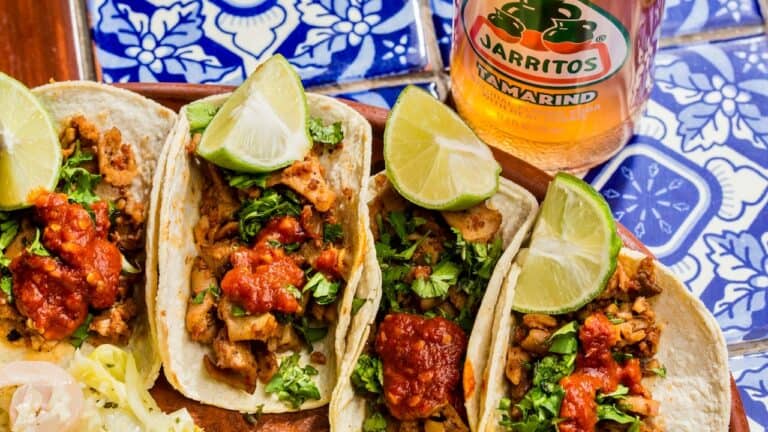
- Build-your-own potluck: a taco or nacho bar guests assemble, with warm proteins on the side.
- Big number: food for a crowd of 50 needs two or three dishes that scale linearly on a three-day plan.
A morning crowd runs on stratas and baked French toast assembled the night before, held warm while a cold fruit corner rounds out plates. The egg math alone matters: plan two per adult, so forty for a group of twenty.
Camp and tailgate cooking flip the order from cook-then-serve to prep-then-heat. Chop, marinate, mix dry bases, and freeze sauces flat so they double as ice, then reheat at the site.
Cook to the Season and the Occasion
Season nudges the menu too. A food for a crowd summer plan leans on cold sides and the grill, so summer food for a crowd runs cooler than a winter spread. Summertime food for a crowd means more grilling and less oven time.
Winter flips it back toward the oven. Christmas food ideas for a crowd follow the same make-ahead spine, just with a roast at the center instead of a grill.
Game day has its own rhythm. Football food for a crowd is finger food that holds on warm, and football game food for a crowd leans on dips, wings, and a pot of chili.
Equipment shapes the plan as much as the calendar. A crockpot food for a crowd holds itself at temperature while you greet people, and a crock pot food for a crowd main frees the oven for sides.
When the day runs short, take out food for a crowd covers the gap without shame, and plated takeout food for a crowd still beats a frazzled host. Fast food for a crowd, in the good sense, is the make-ahead dish you only reheat.
|
Hosting Tip: Cook One Dish Fewer |
Budget for a Crowd Without Cutting Corners
Cost is where feeding a group feels scary and where a little planning pays off fastest. The number to hold in your head is roughly six to nine dollars per head for a casual buffet, less if you lean hard on grain and vegetable sides.
For twenty guests, that is a grocery run of about a hundred and thirty to a hundred and eighty dollars, not the runaway figure people fear. The move that controls the bill is the same one that controls the stress: build around one affordable protein and stretch it.
- Buy the mains by the case cut rather than the tray, and shop staples at a warehouse club.
- Stretch one protein with rice, pasta, beans, and bread, the cheap volume that fills a plate.
- Choose produce in season and skip anything portioned into single servings.
- Put the splurge where guests notice: one good cheese, a bright salad, a real dessert.
A pork shoulder or a big pot of chili with beans feeds a crowd well while costing a fraction of plated cuts. Quick easy food for a crowd stays both quick and cheap, and still leaves the table looking full.
Serve Dietary Restrictions Without Cooking Twice
Somewhere in a crowd of sixteen there is a vegetarian, someone avoiding gluten, and a guest who does not eat pork. The calm move is to build the buffet so it splits along those lines on its own, rather than cooking a separate dish for each one.
- Keep the protein in its own pan and the grain plain, so neither hides an allergen.
- Serve the sauce on the side and the vegetables undressed until the last minute.
- Add one hearty vegetarian anchor, like a bean pot or a grain salad with protein worked in.
- Label each dish and flag the obvious allergens so guests self-serve without cornering you.
Design the plate as parts, not a single mixed dish, and the restrictions solve themselves. A guest who cannot eat the pulled pork still gets rice, beans, salad, and bread, and nobody flags their diet out loud to eat well.
One deliberate vegetarian anchor does more than three token side salads ever will. It lets the restricted guest build a full plate instead of a sad corner of one, and the meat eaters happily pile it on too.
Ask once, ahead of time, and you plan instead of scramble. A quick line on the invite about allergies tells you whether you need that anchor before you shop, not at 6:45 when the oven is full.
Hold a Buffet Safe and Full to the Last Guest
A long gathering is where food safety quietly matters. Hold hot dishes above 140F in chafing dishes or slow cookers, keep cold platters below 40F by nesting them in ice, and never let either sit out longer than two hours.
Refill in small batches from the kitchen rather than topping up a half-empty tray, so nothing lingers in the danger zone. A fresh, full-looking spread also reads more generous than one picked down to the edges.
- Hot line: chafing dishes or slow cookers above 140F, refilled in small batches.
- Cold line: platters nested in ice below 40F, swapped before they warm.
- Two-hour rule: nothing sits out longer than two hours, one on a hot day.
- Drink station: self-serve and away from the food line so nobody queues twice.
The drink station follows the same logic: set it up self-serve, away from the food line, so guests are not queuing twice. A batched non-alcoholic option earns its keep, and our host’s tour of Japanese non-alcoholic drinks is a good starting point.
|
Split a Potluck Without the Group-Chat Math |
Recognize the Payoff When Everything Holds
You can feel it when the plan works. At 6:55 the pulled pork has been holding since four, the rice and roasted vegetables are in a low oven, and the salad is tossed with the dressing still on the side.
Bread is in a basket, dessert is chilling, and the drink station is stocked. Guests start arriving, and you are pouring water, not scrambling.
That calm is not luck. It is the payoff of picking a make-ahead main, scaling by the pound, and running the countdown backward from serving time.
- You touched the food yesterday and this morning, so tonight is mostly plating.
- The oven and the slow cooker do the holding while you greet people at the door.
- One refill run every half hour keeps the spread full without pulling you off the floor.
With the food on autopilot, you have room for the touches that make a night land, like a few fun wine tasting games or a well-stocked bar.
Our rundown of bar tools every home host needs covers the small kit that punches above its size. If you are torn between saving recipes and cooking them at scale, the comparison of The Gourmet Host versus Recime is worth a read.
Copy Three Ready-to-Run Menus, Scaled Up
To make the model concrete, here are three complete menus built on the same spine, scaled up. Each one runs the same four moves: count the pounds, anchor on a make-ahead main, add cheap sides, and stage the work backward from serving time.
- Dinner for 8, about $50 to $70: chili, rice, a green salad, cornbread, and a doctored pie.
- Buffet for 12, about $90 to $120: baked ziti, roast chicken thighs, vegetables, grain salad, bread.
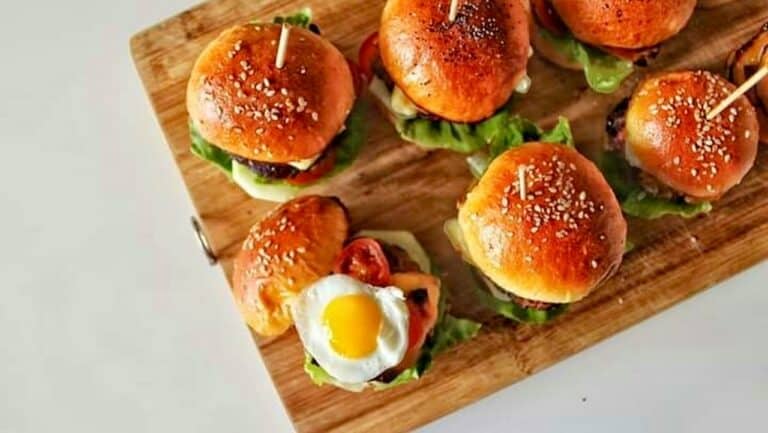
- Party for 20, about $130 to $180: pulled pork sliders, mac and cheese, coleslaw, bean salad, two desserts.
For the dinner for eight, everything but the salad is done the day before. You reheat the chili, warm the cornbread, and dress the salad at the last minute.
The buffet for twelve runs two mains: assemble the ziti two days out and roast the thighs the morning of, holding both warm while guests arrive. The party for twenty is build-your-own in a barbecue key, with the mains holding on warm while guests assemble plates.
The dollar figures move with your region and your protein, but the structure does not. Swap the main, keep the spine, and the same plan feeds any of these tables.
Wrap-Up: Plan the Number Before the Menu
The one line to keep is simple. Plan the number before the menu, anchor the meal on one make-ahead main, scale the rest by the pound, and run the clock backward from serving time.
- Count first: a headcount and a serving time turn worry into a shopping list.
- Anchor second: one hold-well main gives you the slack to host instead of cook.
- Stage third: braises three days out, salads one day, reheats the morning of.
Feeding a crowd does not have to be a stress test; done this way, it is a party you get to attend. You did the work across a few calm days, so the night itself is yours.
Frequently Asked Questions
How much food do you need per person for a crowd?
Plan for about one pound of food per adult total, split across mains, sides, and salad. For a buffet, offer three to four options so guests build a plate. Add ten percent extra for big eaters and second helpings, and round up when kids count as half portions.
What are the easiest foods to make for a large group?
Big-batch dishes that hold well win: baked pasta, chili, pulled pork, rice bowls, and sheet-pan roasted vegetables. They scale cleanly, reheat without drying out, and let you cook ahead. Pair one hot main with two room-temperature sides so you are not juggling every burner at serving time.
How far ahead can you prep food for a crowd?
Casseroles, soups, sauces, and marinated proteins can be made two to three days ahead and stored covered in the fridge. Salads and dressings hold one day if kept separate. Bake or reheat the morning of, and pull cold dishes out thirty minutes before serving so flavors wake up.
Which steps keep buffet food safe during a long gathering?
Hold hot dishes above 140F and cold dishes below 40F, and never let either sit out longer than two hours. Use chafing dishes and slow cookers for warm food, and nest cold platters in bowls of ice. Refill in small batches from the kitchen rather than topping up an emptying tray.
What is a realistic budget for feeding a big group?
Build the menu around one affordable protein and stretch it with rice, beans, pasta, or bread. Buy warehouse-club staples and seasonal produce, and skip individually plated proteins. Expect roughly six to nine dollars per head for a casual buffet, less if you lean on hearty grain and vegetable sides.
How should you plan a casual gathering for 20?
Pick one crowd-pleasing main like a taco bar, pasta bake, or roast chicken, then add two sides, a green salad, and bread. Set out a self-serve drink station and one easy dessert. This mix feeds twenty comfortably, travels well to buffets, and keeps you out of the kitchen once guests arrive.
Continue Reading:
More On Food for a Crowd
- 9 Breakfast Foods for a Crowd: Make-Ahead Ideas
- 8 Camp Foods for a Crowd: Easy Meals to Feed Campers
- 10 Halloween Dinner Ideas to Feed a Hungry Crowd
- 9 Easy Mexican Potluck Ideas to Feed a Big Crowd
- Recipes to Feed a Crowd of 50: Big-Batch Menu Plan
More from The Gourmet Host
- Easy Oven Dinners: Hands-Off Meals for Busy Weeknights
- Japanese Non-Alcoholic Drinks: A Host’s Tasting Guide
- Fun Wine Tasting Games to Play at Your Next Party
- Bar Tools Every Home Host Needs for Better Drinks
- The Gourmet Host vs ReciMe: Save Recipes, Then Cook for a Crowd
Explore TGH Categories
- Set the Scene
- Drinks and Bar
- Plan the Meal
- Engage with Guests
- Games and Toasts
- Tools and Techniques
- Why We Gather