8 Mediterranean Salads to Make for a Crowd at Home
 13 min read
Which salad survives two hours on a buffet table without turning to soup? That single question decides whether your spread looks fresh when the last guest fills a plate or sad by the time dessert comes out. The answer is rarely a bowl of dressed greens.
Salads built on cucumber, tomato, olives, grains, and a sharp lemon dressing hold their texture for hours, scale up without extra fuss, and ride in the car to a potluck without wilting. Across the next eight, you will find the chopped, grain, pasta, and no-lettuce styles that earn their place on a crowd table, plus the batch amounts and the one dressing rule that keeps every bowl crisp.
At a Glance
- No-wilt rule: skip delicate greens for a crowd and lean on cucumber, tomato, grains, and pasta that hold for hours.
- Dress it late: keep the dressing separate and toss within an hour or two of serving so vegetables stay crisp on the table.
- Three styles that scale: chopped salads, grain salads like quinoa and farro, and orzo or pasta salads all batch up cleanly.
- Travel-ready: no-lettuce salads survive a potluck drive and a long buffet without losing their structure.
- Plan the amount: roughly half a cup of side salad per guest, with grain and pasta bowls stretching further.
What Is a Mediterranean Salad?
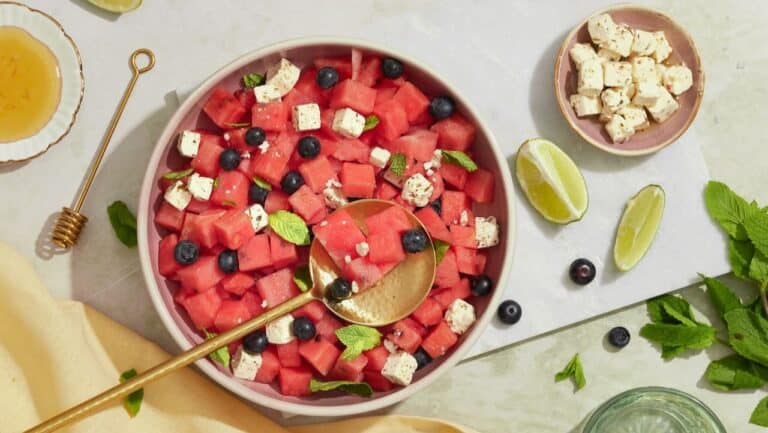
A Mediterranean salad pulls together cucumber, tomato, red onion, olives, and feta with a bright lemon and olive oil dressing, and many versions skip lettuce entirely. For a host feeding a crowd, the real value is structural: these salads hold their crunch on a buffet, scale from six guests to sixteen without rethinking the recipe, and survive the trip to a friend’s backyard. Where a tossed green salad collapses within minutes of dressing, a chopped or grain-based Mediterranean salad keeps its shape, which is exactly what a long table of guests needs.
What makes a Mediterranean salad good for a crowd
A crowd salad has one job that a weeknight side never faces: it has to look as good for guest sixteen as it did for guest one. That rules out anything that wilts, weeps, or browns within the half hour. A scalable base like a Mediterranean salad of cucumber, tomato, and feta is the kind that wins a buffet, and once you can spot the traits that make it work, the eight that follow stop feeling like a random list and start reading as a toolkit.
Sturdy vegetables and grains do the heavy lifting. Cucumber, bell pepper, red onion, chickpeas, and cooked grains all keep their bite for hours, while a Mediterranean chopped salad made of those pieces stays crisp long after a leafy bowl would have surrendered.
Seasonal produce helps too, and a run of Mediterranean summer salads shows how peak tomatoes and cucumbers carry a bowl with almost no dressing. The dressing still matters as much as the produce.
- Firm ingredients like cucumber, peppers, olives, and grains hold their texture, where tender greens go limp once dressed.
- A lemon and olive oil dressing brightens the bowl without curdling in the warmth of a room full of guests.
- A good crowd salad tastes better an hour in, not worse, so you are never racing the clock to serve it.
- A flat, even mix lets guests serve themselves a tidy scoop instead of fishing for stray leaves.
Our test before a big gathering is simple: dress a small bowl, leave it on the counter for ninety minutes, and taste it. A batch of cucumber, tomato, and feta sat out through a 25-guest summer lunch and stayed sharp at the two-hour mark. With that filter in hand, the chopped salads are the natural place to start.
|
Sort Out Who Brings Which Salad |
The chopped salads that hold without wilting
Chopped salads are the backbone of any Mediterranean crowd table because everything is cut to a similar size, tossed together, and built from pieces that shrug off time. There is no lettuce to bruise and no leaf to go translucent. These three are the ones we reach for when the guest count climbs.
Salad 1 and 2: the chopped classic and the no-lettuce Greek
- Salad 1, the Mediterranean chopped salad: Cucumber, tomato, bell pepper, red onion, chickpeas, and feta in even dice, dressed in lemon and oil. It is the most flexible of the bunch and the easiest to double.
- Salad 2, the no-lettuce Greek salad: The Athenian original skips greens for thick wedges of tomato, cucumber, green pepper, onion, olives, and a slab of feta. A faithful classic Greek salad is the anchor of the whole category and the salad most likely to travel intact.
If you want a meatless centerpiece bowl rather than a side, a fresh Greek salad scales up generously and keeps every mixed-diet guest covered. The third chopped option leans on the tabbouleh family but stays light on herbs, which makes it a strong potluck candidate. A bowl of tomato, onion, and cucumber dressed simply holds in a cooler for the drive and only tastes better as the juices mingle.
- Salad 3, the travel salad: a tabbouleh-style chopped salad of tomato, cucumber, and onion that rides well and needs no last-minute toss.
- Cut to match: keep every piece roughly the same size so each scoop lands balanced on the plate.
- Salt the tomatoes early: a light salting draws out water you can drain, so the bowl never pools.
Chopped salads cover the fresh, crunchy end of the table. To carry a crowd through a longer meal, you want something with more staying power, and that is where the grains come in.
Grain salads that scale: quinoa, farro, couscous
Grain salads are a host’s quiet advantage. They cook in one pot, stretch a small amount of vegetables across a big bowl, and improve after a few hours in the fridge rather than fading. A grain base also makes a side feel substantial enough that lighter eaters can treat it as a meal.
Salad 4, 5, and 6: the grains that earn their bowl
- Salad 4, the loaded quinoa salad: a loaded Greek quinoa salad packs cucumber, tomato, olives, and feta into protein-rich quinoa, so it holds for hours and travels in a sealed bowl without trouble.
- Salad 5, the herb quinoa salad: for a lighter, herb-forward bowl, a Mediterranean quinoa salad leans on lemon and parsley and scales cleanly from a side dish to a centerpiece.
- Salad 6, farro or couscous: chewy farro and quick couscous both soak up dressing and hold their texture on a warm table far longer than greens ever could.
Cook the grain a day ahead, spread it on a sheet pan to cool fast, then fold in the vegetables. We made a double batch of farro for a 12-guest fall dinner, dressed it at four o’clock for a seven o’clock table, and it was the bowl guests went back to twice. Cooled grain that has been dressed early is one of the few salads that genuinely rewards patience.
- Cool before mixing: warm grain wilts any herbs and softens the vegetables, so let it come down to room temperature first.
- Season the grain itself: toss a little dressing into the warm grain so it drinks in flavor, then add the rest later.
- Add crunch at the end: nuts or fresh cucumber go in just before serving so they keep their snap.
Grains give you ballast and make-ahead freedom. For a table that needs to feel generous and a little playful, a pasta or orzo salad does the same work with a shape guests love to scoop.
|
Hosting Tip: Cool Pasta Before Adding the Dressing |
Pasta and orzo salads for a buffet
Pasta and orzo salads are the crowd-pleasers that disappear first, and they happen to be the easiest of all to make ahead. The starch holds dressing, the bite stays firm for hours, and a single big bowl can feed a long table. They are also the most forgiving if your timing slips, since they only settle into themselves as they sit.
- Salad 7, orzo salad. Tender orzo tossed with cucumber, tomato, olives, and feta makes a Mediterranean pasta salad that scoops neatly and holds beautifully on a buffet.
- Salad 8, the budget orzo. For a bigger crowd on a tighter budget, an orzo pasta salad stretches a box of pasta into a bowl that feeds a dozen without strain.
Cook the pasta a touch past al dente, because it firms up as it chills and you want it tender once cold. Rinse it under cool water to stop the cooking and wash off surface starch, then toss it with a spoonful of oil so the pieces stay loose instead of clumping into a brick.
- Salt the water hard: pasta seasoned from the inside needs far less rescuing later.
- Reserve extra dressing: chilled pasta drinks up dressing, so hold a little back and refresh the bowl just before it goes out.
- Mix in sturdy add-ins: olives, peppers, and chickpeas keep their texture where soft cheese might break down.
Whether you pour grains, pasta, or chopped vegetables into the bowl, every one of these salads lives or dies on the same final step, which is when and how you dress it.
Dressings and the dress-it-late rule
A bright, acidic dressing is what unites every salad on this list, and timing it is the single skill that separates a crisp buffet from a watery one. The classic base is lemon and extra-virgin olive oil with dried oregano, garlic, salt, and pepper, sometimes sharpened with red wine vinegar. Keep it simple and keep it sharp.
Mix the dressing in a jar a day ahead and store it separately from the vegetables. The dress-it-late rule is not fussiness, it is physics: salt and acid pull water out of cut produce, so the longer a chopped salad sits dressed, the more liquid pools at the bottom. Grain and pasta salads are the exception, since the starch absorbs that moisture and improves with a few hours of mingling.
- Build the base bright, with three parts oil to one part lemon or red wine vinegar, plus oregano, garlic, and a pinch of salt.
- A spoon of Dijon emulsifies the dressing so it clings to quinoa and farro instead of sliding to the bottom of the bowl.
- Dress chopped and Greek salads late, within an hour or two of serving, to keep the vegetables firm and crisp.
- Dress grain and pasta salads early, since a few hours ahead lets the flavors settle in and only makes the bowl better.
Good preserved citrus deepens any of these dressings, and a jar of preserved lemons minced fine adds a savory edge plain lemon cannot. With the dressing sorted, the last question is how much of everything to actually make.
|
Set the Salad Quantities Before Shopping |
Batch quantities and make-ahead timing
The last hurdle for a crowd is arithmetic. Cook too little and the bowl empties before half the guests have eaten; cook too much and you are eating tabbouleh for a week. A reliable starting point is about half a cup of side salad per guest, scaling up for grain and pasta bowls that double as a near-meal.
How much to make, and when
- For 12 guests: plan roughly six cups of a side salad total, or more if a salad is doing main-dish duty.
- Grain and pasta stretch further: these are filling, so a slightly smaller scoop per guest still satisfies.
- Always make a little extra: these salads keep well, so leftovers are a gift, not waste.
Spread the work across two days and the night stays calm. Chop the vegetables and cook the grains and pasta a day ahead, storing each component separately.
The morning of, build the grain and pasta bowls and dress them; about ninety minutes before guests arrive, toss the chopped and Greek salads. This staged approach is the same logic behind any hosting system that holds for hours, and it scales as easily for a backyard crowd as it does for a meal that feeds a large group.
One more detail decides the whole table: seasoning. A finishing pinch of the right salt for each dish wakes up a cold salad that tasted flat from the fridge, and a final squeeze of lemon over the bowl right before it goes out brings every one of these eight salads back to life.
Taste, adjust, and let the guests serve themselves, the way a Mediterranean table is meant to work. For more cool, crisp ideas beyond this spread, our roundup of easy summer salad recipes carries the season further.
Frequently Asked Questions
What is in a Mediterranean salad?
A Mediterranean salad usually combines cucumber, tomato, red onion, olives, and feta with a lemon and olive oil dressing. Many versions skip lettuce entirely or add a grain like quinoa, farro, or orzo to make the salad heartier and better suited to a buffet or a meal on its own.
Which Mediterranean salads are best for a crowd?
Chopped salads without lettuce, grain salads like quinoa or farro, and pasta or orzo salads are best for a crowd because they hold their texture for hours and scale easily. Avoid delicate leafy salads, which wilt once dressed and do not survive long on a buffet table.
How far ahead can I make a Mediterranean salad?
Chop and store the vegetables and cook the grain up to a day ahead, keeping the dressing separate. Combine everything and dress the salad within an hour or two of serving so the vegetables stay crisp. Grain and pasta salads can be fully dressed a few hours ahead since they only improve.
How much salad do I need for 12 people?
For twelve people, plan about six cups of a side salad total, which is roughly half a cup per guest, or more if the salad is a main. Grain and pasta salads are more filling, so a slightly smaller portion goes further. Always make a little extra, since these salads keep well.
What dressing goes on a Mediterranean salad?
A simple lemon and extra-virgin olive oil dressing with dried oregano, garlic, salt, and pepper is the classic. Red wine vinegar adds tang, and a spoon of Dijon helps it cling to grains. Keep it bright and acidic, and dress the salad late so the vegetables and greens stay fresh.
Can Mediterranean salads be made vegetarian or vegan?
Yes, easily. Most Mediterranean salads are already vegetarian, and you can make them vegan by leaving out the feta or using a plant-based feta. The vegetables, olives, grains, and lemon dressing carry plenty of flavor, so the salad still feels complete for mixed-diet guests.
Continue Reading:
More On Mediterranean Hosting
- 9 Mediterranean Dinner Party Menu Ideas for Hosts
- How to Build a Mediterranean Mezze Platter at Home
- 12 Easy Greek Appetizers to Serve at Your Party
- Middle Eastern Dinner Party Menu for a Full Table
- 10 Mediterranean Vegetarian Dinner Ideas for Guests
More from The Gourmet Host
- Cocktails and Snacks: How to Pair Drinks and Bites Like a Pro
- Kitchen Knife Guide (3 Knives Every Home Host Needs)
- Family-Style Dinner Wedding Guide: Best Meal Ideas
- Dinner Party Conversation Questions That Keep the Table Talking
- Dinner Party Themes for Every Style: Casual, Cultural, Seasonal, and Creative Ideas
Explore TGH Categories
- Set the Scene
- Drinks and Bar
- Plan the Meal
- Engage with Guests
- Games and Toasts
- Tools and Techniques
- Why We Gather