Elegant Floral Arrangements for Your Dining Table
 15 min read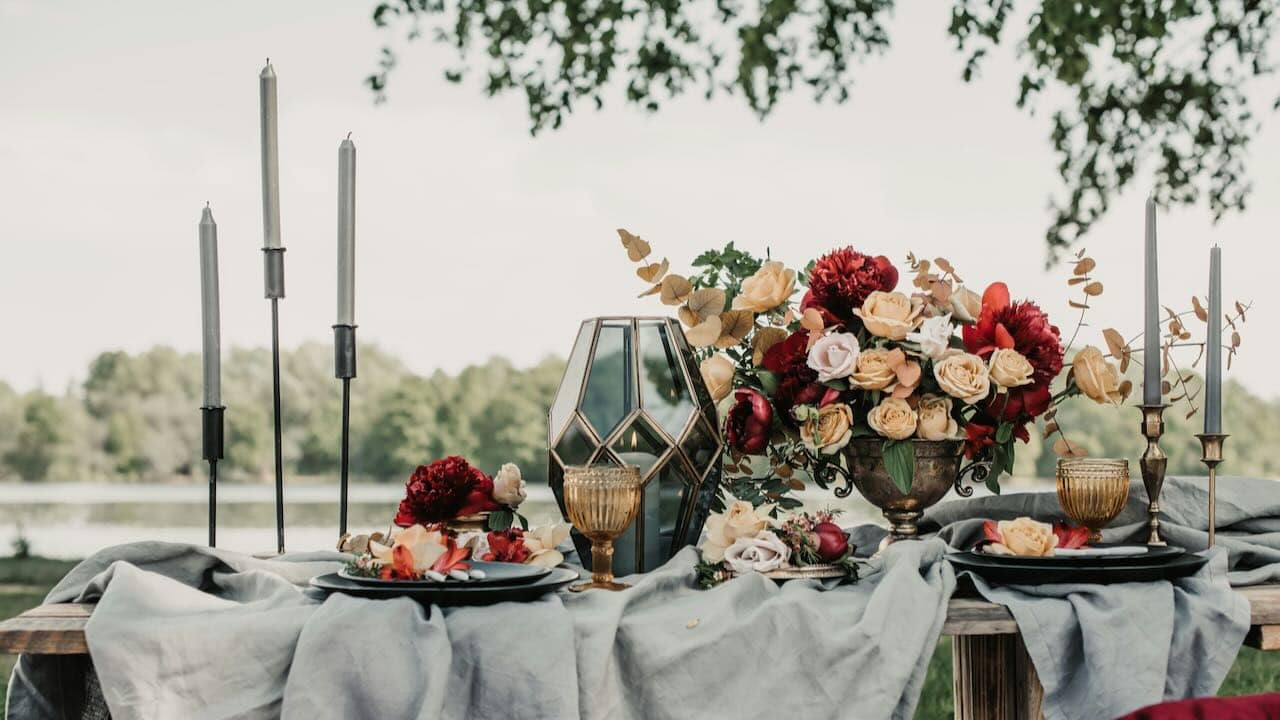
You found the perfect vase at the back of the cabinet, picked up a bunch of flowers at the market, and dropped them into water twenty minutes before your guests arrived. The arrangement looked fine from across the room — but at the table, it blocked half the conversation and wilted before dessert.
The gap between a grocery-store bouquet and a dining-table arrangement that actually works comes down to three things: scale, structure, and knowing which flowers hold up through a full evening.
We’ve broken it down into six sections covering selection, height, seasonal ideas, DIY techniques, and faux alternatives so you can build arrangements that complement your table setting without competing with it.
At a Glance
- Choose flowers with sturdy stems and minimal pollen to avoid mess on your dining table.
- Keep centrepiece height below 14 inches so guests can see each other across the table.
- Rotate seasonal blooms — tulips in spring, dahlias in fall — to keep your floral arrangements fresh year-round.
- Faux florals and silk flower centerpieces offer a practical alternative for hosts who entertain frequently.
- A single well-scaled flower arrangement creates a stronger focal point than multiple small vases scattered across the table.
A dining table flower arrangement is easier to choose when you start with the job it needs to do. Use this guide to match the look to your budget, the time available, and materials that stay low enough for conversation.
| Style | Budget | Setup time | Materials |
|---|---|---|---|
| Relaxed everyday | Low | About 10 minutes | A clear jar or three bud vases with one bunch of tulips or zinnias |
| Loose garden | Medium | About 15 minutes | A low ceramic bowl, floral tape, roses or ranunculus, and eucalyptus |
| Formal dinner | High | 15 to 20 minutes | A low wooden trough, lisianthus or roses, clipped greenery, and candles outside the arrangement |
| Reusable | Higher upfront | About 10 minutes | Silk flowers with irregular stems, fresh eucalyptus, and a low bowl or footed compote |
For one complete arrangement, put a low vessel, clear floral tape, clippers, flower food, 15 to 20 sturdy stems, and one bunch of greenery on your shopping list. Build the tape grid first, set the greenery frame, then add the focal flowers. Turn the piece as you work, and finish with the seated sightline test before you set the plates. If anyone has to lean around the flowers, trim the tallest stems.
What Are Floral Arrangements for a Dining Table?
A floral arrangement for the dining table is the one piece of décor guests notice before a single plate is served — and the one most likely to get in the way if it’s the wrong size. For home hosts planning a dinner party or special occasion, the real challenge isn’t picking beautiful flowers; it’s building a design that fits the table’s dimensions, survives a three-hour meal, and lets everyone talk without leaning around a wall of petals. What separates a dining-table arrangement from a general bouquet is the constraint it operates under: height must stay below the sightline, width can’t crowd place settings, and the flowers need to look intentional rather than leftover from the living room.
Choosing the Right Flowers for Your Dining Table
The best flowers for a dining table are the ones that hold their shape for hours without shedding petals onto your plates. That rules out some popular picks and opens the door to varieties most hosts overlook.
Start with stem strength. Roses, Ranunculus, and Lisianthus stay upright in low arrangements without flopping after two hours in a warm dining room. Hydrangeas work well in wider, more relaxed floral designs, though they drink water fast — top up the vase before guests arrive.
For a dinner party where the table will be set for three or more hours, avoid delicate blooms like sweet peas and poppies that wilt under indoor lighting.
- Pollen-free varieties matter: Lilies are stunning but dust everything in orange. Choose Asiatic varieties with stamens removed, or switch to tulips.
- Fragrance check: Strong-scented flowers like gardenias or stargazer lilies can overpower the food. Pick blooms with a light or neutral scent for the dining room.
- Colour anchoring: Match your flowers to one accent in the existing table setting — a napkin colour, a candle shade, a charger plate — rather than introducing an entirely new palette.
- Greenery fillers: Eucalyptus, ruscus, and fern fronds fill space without adding cost, and they last longer than most cut flowers.
A step-by-step guide from Rockcastle Florist walks through choosing flowers by vase type — a useful reference if you’re working with a container you already own. The principle is simple: match the flower head size to the vase opening so stems have support without looking cramped.
If you’re building a table setting from scratch, see 7 Creative Table Setting Ideas for Your Next Dinner Partyfor layouts that pair well with a central arrangement. Once you know which flowers hold up, the next decision is how tall or wide to go.
|
Keep the Party Plan Together |
Low vs. Tall Arrangements: What Works Best?
The answer depends on your table shape and how many guests you’re seating. Low arrangements — anything below 14 inches — keep sightlines clear and work on round, square, and standard rectangular dining tables. Tall arrangements above 24 inches can create drama on long banquet-style tables where guests primarily talk to the people beside them, not across.
Most home dining tables seat six to eight people, which means a low, wide centrepiece is almost always the right centerpiece for residential dinner parties. The classic test: sit in a chair and check whether you can see every guest’s face without leaning. If the flowers block anyone, they’re too tall.
- Round tables (4–6 guests): One centrepiece, 8–12 inches tall, centered. A dome-shaped arrangement with garden roses or peonies creates a natural focal point.
- Rectangular tables (6–8 guests): A long, low trough or a line of three small vases. Spread the flowers along the centre axis so the arrangement doesn’t leave dead space at the ends.
- Oval or extended tables (8–12 guests): Pair a central low arrangement with two smaller flanking pieces. This approach, shown in Home Stratosphere’s gallery, distributes colour evenly without stacking height.
For special events like milestone birthdays or anniversary dinners, a single tall arrangement on a side table or console table draws the eye when guests enter — without blocking conversation once everyone sits down. Save the height for where it won’t interfere.
Now that you have the proportions locked, seasonal flowers are the fastest way to make an arrangement feel current and intentional.
Seasonal Floral Centrepieces Worth Recreating
Swapping your floral centerpieces with the seasons keeps a dining room from feeling static — and gives you a reason to experiment with new colour palettes every few months. You don’t need to overhaul the entire table. Changing the flowers alone shifts the mood.
- Spring: Tulips, daffodils, and ranunculus in soft pastels. A loose, just-picked look in a clear glass vase suits the season and doubles as a Mother’s Day centrepiece with minimal adjustments. Happy Happy Nester’s centrepiece collection includes a simple spring layout that takes under ten minutes.
- Summer: Sunflowers, zinnias, and dahlias in warm yellows and oranges. Use a wide, shallow bowl to keep the arrangement low and informal for outdoor or patio dining.
- Fall: Burgundy dahlias, dried wheat, and branches with berries. Mix textures — smooth petals against rough seed pods — for depth. This is where year-round designs give way to richer, moodier tones.
- Winter: Evergreen sprigs, white roses, and silver-dollar eucalyptus. Keep it tight and structured. A Balsam Hill spring-to-winter tablescape guide shows how one base arrangement transitions across colder months with small swaps.
In our experience hosting through every season, the best approach is to pick one hero flower per quarter and build around it with three to four supporting stems. This prevents the arrangement from looking like you emptied the entire flower shop into a vase.
If seasonal upkeep feels like too much work, the next section covers how to handle it once and forget about it for months.
|
Hosting Tip: Trim Stems Before Arranging Flowers |
DIY Arrangement Guide for Any Skill Level
You don’t need florist training to build a dining-table arrangement that looks intentional. What you need is a method — and the whole process takes about fifteen minutes once you’ve done it twice.
Start by selecting a vessel. A low ceramic bowl, a wooden trough, or even a repurposed bread basket lined with a plastic insert all work. The container dictates the shape, so choose it before you buy the flowers. Stacy Ling’s 10-minute table décor method uses a simple footed bowl that doubles as a home décor piece on a coffee table between dinner parties.
Follow this sequence for a full, balanced look:
- Step 1 — Grid the base: Lay a grid of clear floral tape across the vase opening. This holds stems in position and prevents the arrangement from collapsing inward.
- Step 2 — Set the greenery frame: Insert Eucalyptus or Ruscus first, angled slightly outward. This creates the width and hides the tape.
- Step 3 — Place focal flowers: Add three to five of your hero flower at varying heights. Odd numbers look more natural than even. Keep the tallest stem no higher than 12 inches above the table surface.
- Step 4 — Fill gaps with secondary blooms: Tuck smaller flowers and filler like baby’s breath or wax flower into empty pockets. Turn the arrangement 360 degrees to check every angle.
- Step 5 — Trim and water: Cut stems at a 45-degree angle for maximum water uptake. Fill the vessel to within an inch of the rim and add flower food if you have it.
We’ve found that the biggest mistake home hosts make is overcrowding. Fifteen to twenty stems is enough for a standard centrepiece — you can plan your next gathering with that number in mind using the Gourmet Host app to keep your prep list organised alongside your menu.
If you want the look without the upkeep, the next section is for you.
Silk and Faux Options That Actually Look Real
The stigma around artificial flowers has faded, and for good reason. Modern faux florals use realistic petal textures, bendable stems, and colour gradients that are hard to spot from across a dining room. For hosts who entertain monthly or want year-round designs that never wilt, faux flower centerpieces are a practical long-term investment.
Petals’ collection of silk floral arrangements includes beautiful silk flower centerpieces in a wide assortment of styles — from tight rose domes to loose garden-style sprays. The best faux pieces mimic imperfection: slightly open buds, a petal curling at the edge, stems at uneven heights. Avoid arrangements where every flower is identical and evenly spaced — that reads as artificial even from a distance.
- Mixing real and faux: Pair exclusive silk stems with fresh greenery to blur the line. Real eucalyptus tucked around faux roses is a combination that fools most guests.
- Scent trick: Add a few drops of essential oil to the base of the vase or onto a cotton ball tucked behind the faux flowers. Lavender or rose oil adds the missing sensory layer.
- Maintenance: Dust monthly with a soft brush or a cool hairdryer on low. Robyn’s French Nest shares ideas for kitchen and dining table arrangements that transition between rooms without extra work.
Faux flowers also solve the corporate events problem. When you’re decorating a dining space that hosts recurring gatherings — a weekly book club, a monthly dinner rotation — investing in two or three quality faux arrangements and rotating them seasonally saves hours and money. Treat them like unique works of art that anchor the space between special events.
For more on styling the full table beyond the centrepiece, our guide to setting a dinner table like a pro covers everything from plate placement to glassware. Whether you choose fresh or faux, the arrangement is just one layer of the complete table setting.
|
Share Every Hosting Task Clearly |
How One Centrepiece Sets the Tone for the Whole Table
A single well-chosen floral arrangement does more work than most hosts realise. It anchors the colour palette, signals the formality level, and gives guests something to notice the moment they sit down. Decorilla’s dining table décor guide calls the centrepiece the “visual anchor” of the room — the element that tells guests whether the evening is casual or considered.
From years of gathering around the table, we’ve learned that the arrangement is often the first thing guests compliment and the last thing they photograph before leaving. It’s the easiest place to make a strong impression with minimal effort.
- Match the flower arrangement to the occasion: Tight, structured bouquets for formal dinners. Loose, trailing arrangements for casual Friday gatherings. The flowers communicate the dress code before a single word is spoken.
- Use colour to reinforce your theme: Monochrome arrangements feel sophisticated. Mixed palettes feel relaxed and welcoming. Pick one direction and commit.
- Consider what surrounds it: Candles on either side of the centrepiece warm the scene. Place cards beside each setting personalise the table. Every element in a variety of styles works together when the centrepiece leads.
If you’re looking for ambience ideas that go beyond the flowers — lighting, music, scent — 3 Easy Ambience Tips for the Perfect Dinner Party Mood covers the details that complete the scene.
And for hosts who want step-by-step help designing a menu to match their table, our menu design guidepairs well with your floral planning. Start with the centrepiece, build the table around it, and let the rest of the evening follow.
You can plan the full evening — table and menu together — in the Gourmet Host app.
Frequently Asked Questions
What flowers look best on a dining table?
Roses, ranunculus, tulips, and lisianthus are reliable choices because they hold their shape for hours and produce minimal pollen. Choose blooms with a light scent so they complement the food rather than compete with it. Match the colour to one element already on the table for a cohesive look.
How do I make a simple table centrepiece?
Start with a low vessel, tape a grid across the opening, and add greenery as a base layer. Place three to five focal flowers at varying heights, fill gaps with smaller blooms, and trim stems at a 45-degree angle. The entire process takes about fifteen minutes once the flowers are on hand.
What is the best height for a table centrepiece?
Keep centrepieces below 14 inches for standard dining tables so guests maintain eye contact across the table. Taller arrangements above 24 inches work only on long banquet tables where conversation happens side to side. The seated sightline test is the simplest way to check.
What is the best vase shape for a dining table centrepiece?
Low, wide vessels like ceramic bowls, wooden troughs, and footed compotes work best for dining tables because they distribute flowers across the table’s centre axis. Tall, narrow vases push the arrangement upward and risk blocking sightlines. Choose a shape that matches your table’s proportions.
How long do fresh flower arrangements last on a table?
Most fresh arrangements last five to seven days with proper care. Trim stems every two days, change the water, and keep the vase away from direct sunlight and heating vents. Hardier flowers like chrysanthemums and carnations can last up to ten days under good conditions.
Are artificial flowers acceptable for a dinner party?
Absolutely. High-quality faux florals and silk flower centerpieces are widely used by hosts and event planners for recurring gatherings. The key is choosing pieces with realistic petal textures and irregular stem heights. Mixing faux stems with fresh greenery makes them nearly indistinguishable from the real thing.
Continue Reading:
More On Party Decoration Ideas
- 7 Creative Table Setting Ideas For Your Next Dinner Party
- Centrepiece Ideas for Every Dining Room Table
- Dinner Decorations Ideas for Every Occasion
- Fall Table Centrepiece Ideas for Cozy Gatherings
- Graduation Party Centrepiece Ideas to Celebrate
- Party Decoration Ideas That Set the Scene
- Spring Table Decor Ideas That Feel Fresh
More from The Gourmet Host
- Types of Miso and How to Use White vs Red Paste
- Brunch Table Setting Ideas for Every Style
- Cook-Ahead Dinner Party Menu: Make It All in Advance
- Anniversary Dinner Ideas to Cook at Home for Any Milestone
- Winter Theme Party Ideas for Cozy Gatherings
Explore TGH Categories
- Set the Scene
- Drinks and Bar
- Plan the Meal
- Engage with Guests
- Games and Toasts
- Tools and Techniques
- Why We Gather