Gala Theme Ideas for At-Home Charity-Style Parties
 18 min read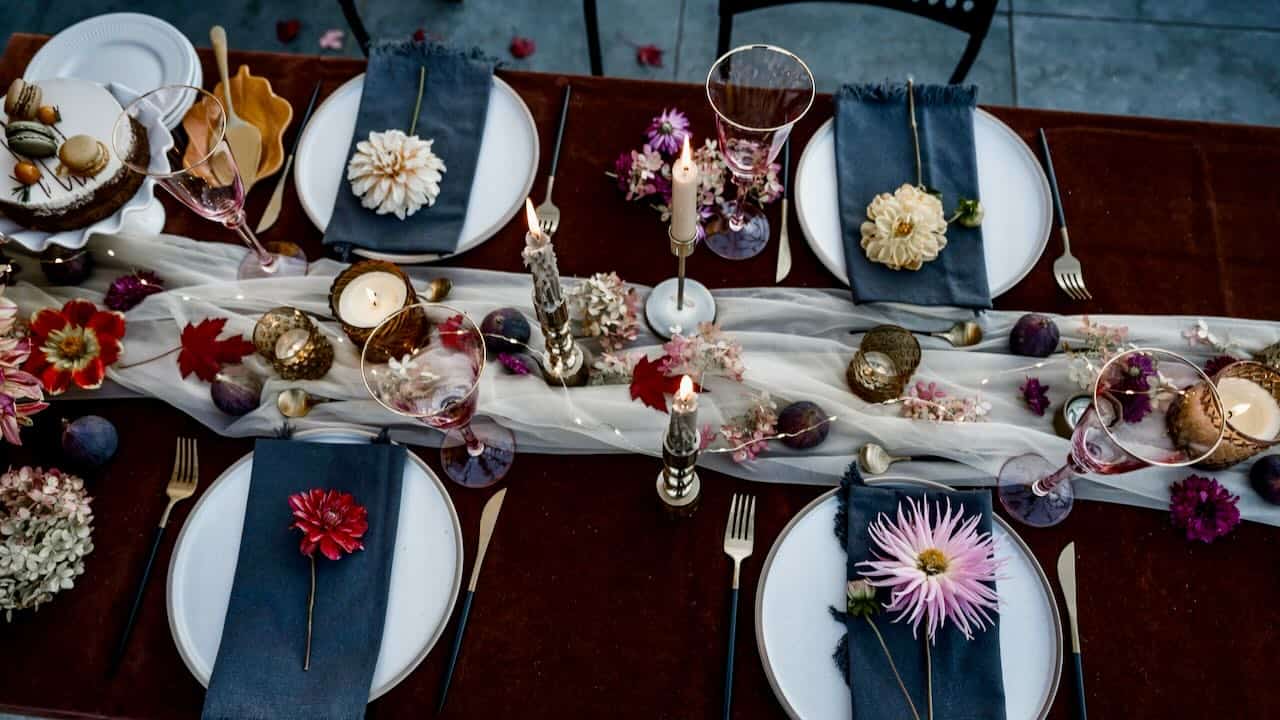
A gala theme for an at-home charity-style party has to do three jobs at once: justify the dress code, frame the giving mechanic, and give 8–12 guests something to talk about between courses.
The theme is the connective tissue that makes a small dining room read as a fundraising-grade evening — it tells guests how to dress, sets the tone the menu and music are planned against, and gives the silent-auction or pledge moment somewhere coherent to land at a table that size.
Each theme below is structured around the same four working parts: the dress code language to put on the invitation, the decor cues that telegraph the theme without overproducing the room, the giving format the theme makes natural at a small table, and the conversational hook that holds the group together through a long evening.
The list runs from the most flexible themes down to the most production-heavy, with the prep window and the room footprint each one needs spelled out, so a host can match the theme to the night she actually has time to build.
At a Glance
- Five classic gala themes — masquerade ball, casino night, Great Gatsby, white gala, and winter wonderland — scale cleanly to 8-12 guests in a residential dining room when the visual cues are concentrated on the table.
- A working at-home gala budget runs $400-$800 for the room — not the food — and replaces venue, lighting, and live-band costs with rental coupes, fairy lights, and one live instrument.
- The silent auction translates to a guess-the-cause envelope game that protects the giving moment without a paddle, a microphone, or an emcee.
- A gala dinner differs from a formal dinner party in three ways: a named cause, a dress code on the invitation, and a ceremonial moment between courses.
- Residential-friendly themes (white gala, winter wonderland, secret garden) outperform venue-dependent themes (masked ball, Mardi Gras) when the room is under 200 square feet.
What Is an At-Home Charity Gala?
Gala theme ideas, at the home-host scale, are the visual and ceremonial choices that turn a 10-person dinner into an evening raising money for a named cause without a ballroom or printed tickets. The form keeps the three load-bearing elements — formal attire, a moment of giving, and a unifying visual theme — and strips out the venue, the staffed bar, and the microphone. For a host with 8 to 12 guests and a $500 envelope of cash to donate by end of night, that compression is what makes the evening land as a gala instead of a formal dinner party.
What Scaling a Gala to a Home Dining Room Requires
A charity gala at venue scale runs on three budgets: room and lighting (40% of cost), entertainment and audiovisual (25%), and food and beverage (35%). Pull the room budget out of a hotel ballroom and into a 14-by-16-foot dining room and the math collapses.
The remaining work is concentrating the gala feel onto the surfaces guests will see — the table, the entry, and the doorway between living room and dining room.
The three load-bearing elements that survive the scale-down
Formal attire, a unifying visual theme, and a giving moment are the only three elements that have to make the trip from venue to home.
The classic cocktail party tradition documented at Wikipedia sits at the same intersection — formal dress, a single hosted space, drinks first, then food — which is why the cocktail-party blueprint is the right starting frame for a home gala rather than the staff-driven banquet model.
- Formal attire on the invitation: black-tie event language for an evening gala, cocktail attire for a Sunday afternoon. The dress code does the work the venue normally does.
- One unifying visual theme: concentrate it on the table and the entry. A masquerade ball needs masks at the door; a winter wonderland needs the table to read white and silver before guests sit down.
- A ceremonial giving moment: between the main course and dessert, no microphone needed. The envelope game in section five handles this without breaking the conversation.
Where the venue costs go and what replaces them
RallyUp’s overview of fundraising gala ideas at venue scale lists ticket sales, venue selection, and live-band entertainment as the three-line items that consume most planning time. None of them apply at home. The host already owns the room, the ticket is the dinner invitation, and a Sonos playlist plus one live instrument (a violinist for two hours, $200-$300) replaces a five-piece band at a tenth of the cost.
Lighting is the sleeper category. Overhead dining lights kill any theme on contact — they read as kitchen lighting, not gala lighting. Two strands of warm fairy lights along the ceiling line, three taper candles on the table at 18 inches, and a single pin spot on the centerpiece will read as deliberate to every guest who walks in. The next decision is which gala theme carries this scale without staging.
With the room concept locked in, the next decision is the gala theme that survives the trip from a ballroom to a 14-by-16-foot dining room.
|
Keep The Gala Costs In Check |
Five Gala Theme Ideas That Carry a Living-Room Scale
Five classic gala themes survive the trip from ballroom to home dining room because their visual cues compress onto a table without losing the formal event signature. Five more — Mardi Gras, Hollywood red carpet, Arabian nights, beach gala, and circus — depend on staging, square footage, and entry sequences a residential space cannot deliver, so they read as costume parties at home.
Pick from the first list.
- Masquerade ball — elegant masks at the door, candlelight, deep jewel tones on the table, and a string quartet or violinist in the room. Reads as a gala from the first sip.
- Casino night — felt poker mat over a side table, a single roulette set rented for $80, classic cocktails at a small bar cart. Reads playful-formal and photographs well.
- Great Gatsby — art deco gold and black, a 1920s playlist, flapper-friendly dress code on the invitation. Carries the Roaring Twenties energy in a 200-square-foot room.
- White gala — white décor, white dress code, fresh flowers in white and cream. Timeless elegance with no costume pressure on guests.
- Winter wonderland — silver and white, fairy lights, branches in tall vases, a single snow-machine effect at the entry. Strongest performer for colder months.
The masquerade ball at home: where the masks belong
AMWorldGroup’s catalog of gala theme ideas for 2026 ranks the masquerade ball as the most popular gala theme four years running, and the at-home version holds up under that ranking.
Hand a guest a velvet eye mask at the door, dim the room to 40% on a single dimmer, and pour sparkling wine into rented coupes.
The mask is a costume the guest wears for 90 minutes — long enough to feel ceremonial, short enough to come off before dessert without anyone losing the thread.
Casino night and Great Gatsby: the two-table compromises
A casino night at home runs on one rented blackjack felt and a small roulette wheel, set up on a console table or sideboard before guests arrive.
Heritage North Events’ top 10 gala theme ideas list calls this out as a friendly competition format that scales to 8 guests as cleanly as 80 — the giving game runs alongside, not on top of, the play.
Great Gatsby sits one notch more formal: art deco dinnerware on the table, a 1920s jazz playlist instead of a quartet, and a single bottle of champagne being poured into rented coupes.
White gala and winter wonderland: the lowest-friction options
Paperless Post’s roundup of glamorous gala theme ideas puts white gala and winter wonderland at the top of the residential-friendly list because both themes ask less of guests than a costumed theme. White dress code reads as instantly elegant on the invitation; winter wonderland leans on a centerpiece of white branches, silver candlesticks, and string lights in colder months.
The five themes above all answer the next question — the difference between a gala dinner and a formal dinner party.
How Does a Gala Dinner Differ from a Formal Dinner Party?
A gala dinner is a formal dinner party with three additions: a named cause or organization, a dress code printed on the invitation rather than implied, and a ceremonial moment between courses.
Pull any one of those three out and the evening reverts to a formal dinner party.
Add all three and the same 12 guests around the same table experience the night as a gala — even when the room, the food, and the dress code would have produced an excellent formal dinner party on their own.
What the named cause changes about the room
Julia Charles Events’ breakdown of top themes for gala dinners makes the named-cause distinction explicit: a gala dinner has a reason printed somewhere — on a menu card, in the welcome speech, on the envelope at every setting — and a formal dinner party does not.
The reason can be a charity fundraiser, a friend’s important cause, a memorial, or a milestone. What it cannot be is unstated. Guests need to know why the table is dressed for a gala instead of a Tuesday.
Three structural differences that reshape the run-of-show
- The dress code lands on the invitation: black-tie, cocktail attire, white tie, or themed (“masquerade — masks provided”). A formal dinner party leaves dress to the guest’s read of the venue.
- A ceremonial moment between courses: the silent-auction envelope game, a 60-second cause speech, or a single shared toast. Formal dinner parties skip this entirely.
- A program, even an informal one: guests arrive knowing the evening has a shape — drinks, dinner, giving moment, dessert. Formal dinner parties unfold conversationally.
Why the gala framing changes guest behavior
Biagio Events’ notes on creative gala theme ideas at private scale observe that guests at a gala arrive in a different posture — they expect to be asked to do something, even something small, and they dress for it.
Tell guests the same evening is a formal dinner party and they arrive expecting to enjoy the meal; tell them it’s a gala dinner with a 60-second giving moment and they arrive ready to participate.
That posture shift is the engineering, not the room. The next question is what entertainment fills the giving moment without a paid emcee.
With the room lit and the framing engineered, the next decision is the entertainment that fills the space across a four-hour evening.
|
Hosting Tip: Plan One Shared Moment |
Gala Entertainment That Fills a 12-Person Room
Live entertainment at venue scale means a five-piece band, a hired emcee, and a DJ for the dance floor. None of those work in a 200-square-foot dining room, and none are necessary.
The home gala runs on one live instrument for cocktails, a curated playlist for dinner, and a single 60-second ceremonial moment between courses — none of it loud enough to fight conversation.
The one-instrument rule for home cocktail hour
Qgiv’s catalog of gala entertainment ideas at scale makes the live-band the centerpiece of fundraising galas — the talented artist on the stage. At home, one instrument does the same job. A violinist plays for 90 minutes during cocktails and the start of dinner, then leaves; a string quartet at home is too loud at any volume.
Local conservatories and music schools list classical music students who play house engagements at $150-$300 for a two-hour evening, and the resulting magical night reads as more intimate than a hired band ever could.
What replaces the dance floor at 12 guests
- A photo backdrop in a corner — a fabric panel, two table lamps for soft light, and a Polaroid camera on a side table. Guests photograph each other in pairs without a hired photographer.
- Card games over coffee — a deck of vintage playing cards or a single round of a gala-appropriate game (charades, two-truths, themed trivia) replaces the dance floor and lasts about 35 minutes.
- A short cause speech — the host or a guest delivers a 60-second remark on the named cause, no microphone. The toast lands as ceremony, not as an awards ceremony.
The 60-second giving moment as the program
The single ceremonial moment between main course and dessert is the entertainment. Twelve guests, one envelope at each setting, a 60-second remark, then dessert. The full giving sequence runs about four minutes.
At a fundraising gala the equivalent stretches to 25 minutes with an awards ceremony, a paddle raise, and a hosted live auction; the home version compresses the same ritual into a window short enough that nobody puts down their wine glass.
Pairing the moment with a single shared toast is how most home hosts handle it — our guide to best quotes for toasts that land at the table has 30 verified options.
The next decision is the silent auction itself.
The Fundraising Element at a Private Gala Dinner
A silent auction at venue scale runs on bid sheets, paddles, paid auctioneers, and software. None of those scale to 12 guests at a dining table.
The home version replaces the silent auction with a guess-the-cause envelope game that delivers the same psychological lift — the giving moment, the friendly competition, the sealed result — on a four-minute clock with one envelope per guest.
How the envelope game replaces the bid sheet
OneCause’s overview of fundraising gala mechanics at scale documents the silent auction as the fundraising load-bearing structure of every charity gala — the ticket sales pay for the room, the auction pays the cause.
At home the structure inverts: the host or a co-host commits a fixed amount ($500-$1,000 is typical for a 10-12 person dinner), and each guest privately writes a guess at the named cause’s annual budget on the envelope at their setting.
The closest guess wins a small prize; the host then donates the committed amount to the cause and announces it before dessert.
The four mechanical pieces that make the envelope game work
- One envelope at every setting: addressed to the cause, with a silver pen tucked under the place card. The envelope is the prop and the score sheet.
- A printed brief on the cause: two short paragraphs about who the cause serves and why it matters tonight. Guests need facts to ground the guess.
- A 60-second host announcement: between main course and dessert, the host names the closest guess, announces the donation amount, and thanks guests for showing up dressed for it.
- A small winner’s prize: a bottle of wine, a candle, a small bouquet. The prize keeps the game lighthearted; the donation is the actual outcome.
The donation math that holds across guest counts
Tagvenue’s catalog of fundraising gala ideas across scales documents typical per-guest giving at $200-$500 for an in-person gala. The at-home equivalent runs lower per head ($40-$100) but lands the same total ($500-$1,200 for 10-12 guests) because the host absorbs the room cost the venue would charge.
Some hosts ask each guest to bring a sealed cash gift in addition to the host’s commitment; others run host-funded only.
Both work — what matters is the ceremonial sealed-envelope moment between courses, not the dollar architecture.
Our guide to hosting interactive dinner parties covers the broader format. The last decision is whether to run a residential-friendly theme or push for one that needs more square footage than the room can offer.
With entertainment, mechanics, and giving sequence in place, the last decision is whether the chosen theme fits the room as it stands.
|
Keep Every Gala Invite Organized |
Pick a Theme Your Room Can Actually Hold
The last decision a home host makes is whether the chosen theme fits the room as it stands tonight.
Some gala themes scale down cleanly — white gala, winter wonderland, secret garden, masquerade ball at small scale, casino night, Great Gatsby. Others (Mardi Gras, Hollywood red carpet, Arabian nights, summer galas at outdoor events, beach gala, circus) need staging, a venue, or a square footage residential rooms cannot deliver — and they read as costume parties when forced into a dining room.
The room test: a 90-second walkthrough
Stand in the doorway of the dining room with the lights at the level you plan to host at. Picture the centerpiece, the candles, the dress code, the entry moment when the first guest walks in.
If the theme reads as theatrical (red carpet, stage, fashion show, hot air balloon ride backdrop), the room is fighting the theme. If it reads as elegant or ceremonial (white linen, candlelight, masks, crystal), the room is holding the theme. Adjust the theme, not the room.
Five residential-friendly themes ranked for 200-square-foot rooms
- White gala — lowest friction, broadest guest comfort, holds at any guest count from 6 to 14.
- Winter wonderland — strongest performer for colder months, white décor scales, fairy lights add depth without volume.
- Masquerade ball — high impact, masks do the visual work, runs best at evening galas with candlelight.
- Casino night — playful-formal, single rented felt and a deck of cards is the entire kit, photographs well.
- Great Gatsby — Roaring Twenties energy compresses into art deco place settings and a single jazz playlist, no costume pressure.
The two themes worth skipping at residential scale
A masked ball at venue scale builds toward the moment masks come off on a dance floor; at home, twelve people in masks for four hours run out of conversational gas around hour two — keep masks for cocktails and the ceremonial moment, then cue guests to take them off before dinner.
Mardi Gras at home reads as a costume party rather than a charity gala because the visual vocabulary (purple, green, gold, beads, jester hats) is too playful to carry a giving moment without irony.
Once the theme matches the room, the rest of the work is mechanical. Pair the chosen theme with the right table — our guides to centrepiece ideas for the dining room table and elegant floral arrangements for any dinner party carry the visual layer — and a wine plan.
Build the menu around the wine instead of the other way around; the TGH guide to wine pairing menus for any dinner party covers the sequencing.
The room is the constraint, the theme is the lens, and the giving moment is the reason — get those three right and the home gala lands the way the ballroom version was supposed to land but rarely does.
Frequently Asked Questions
How do you scale a gala theme down to 8-12 guests in your home without losing the gala feel?
Concentrate the visual cues on the table and entry, not the room. Keep formal attire, one unifying theme, and a giving moment between courses; drop the venue, the band, and the emcee. Two strands of fairy lights, three taper candles, one live instrument, and rented coupes carry the gala signature inside a 200-square-foot dining room.
What’s the smallest realistic budget that still lets a private gala dinner feel like a gala?
Around $400-$800 for the room, separate from food. That covers a violinist for two hours ($150-$300), rented coupes ($60-$120), flowers ($80-$140), candles and fairy lights ($40-$80), and printed envelopes ($20-$40). Below $400 the visual cues thin out; above $800 the spend stops contributing to the gala feel and starts duplicating venue costs.
How do you replicate the silent-auction / fundraising element at a small at-home charity dinner?
Run the envelope game. One sealed envelope at every setting addressed to the cause, a printed two-paragraph brief on the named cause, and a 60-second host announcement between main and dessert naming the closest guess and the donation. The host commits $500-$1,000 in advance; the ceremony lasts four minutes, no paddle, no microphone, no auctioneer.
What’s the difference between hosting a “gala dinner” and hosting a “formal dinner party”?
Three additions turn a formal dinner party into a gala: a named cause on the invitation, a dress code (black-tie, cocktail attire, masquerade) on the invitation, and a ceremonial moment between courses. Pull any one out and it reverts to a formal dinner party. Add all three and the same room, table, and guest list lands as a gala.
How do you communicate a black-tie or formal dress code without alienating guests who don’t own one?
Print the dress code on the invitation, then add a softening line. “Black-tie optional. A dark suit reads the same in candlelight” handles guests without a tuxedo. “Cocktail attire. A dress or jacket and tie” works for white gala. Send wording two to three weeks ahead so guests can borrow, rent, or pull from the closet without panic.
Which gala themes adapt best to a residential space versus needing a venue?
White gala, winter wonderland, secret garden, masquerade ball, casino night, and Great Gatsby scale to home dining rooms because the visual cues compress onto a table. Mardi Gras, Hollywood red carpet, Arabian nights, summer beach galas, and circus themes need staging, square footage, or outdoor events a residential space cannot deliver. They read as costume parties indoors.
Continue Reading:
More On Themed Dinner Party Ideas
- 15 Fun Themed Dinner Party Ideas Guests Will Love
- 21 Dress Up Party Themes for Adults Worth the Effort
- Party Outfit Themes That Match Every Dress Code Vibe
- Themed Food Days of the Week: Easy Meal-Plan Ideas
More from The Gourmet Host
- The Complete Cooking Techniques List for Confident Home Hosts
- Minute to Win It Games for Adults (25 Funny Picks)
- Instead of Cocktail Hour, Try These Wine and Snacks Combos
- Birthday Party Decorations for Adults: Themes That Work
- Birthday Party Ideas for Adults That Feel Worth the Effort
Explore TGH Categories
- Set the Scene
- Drinks and Bar
- Plan the Meal
- Engage with Guests
- Games and Toasts
- Tools and Techniques
- Why We Gather