Tea Party Menu: A 3-Tier Plan for Afternoon Tea
 12 min read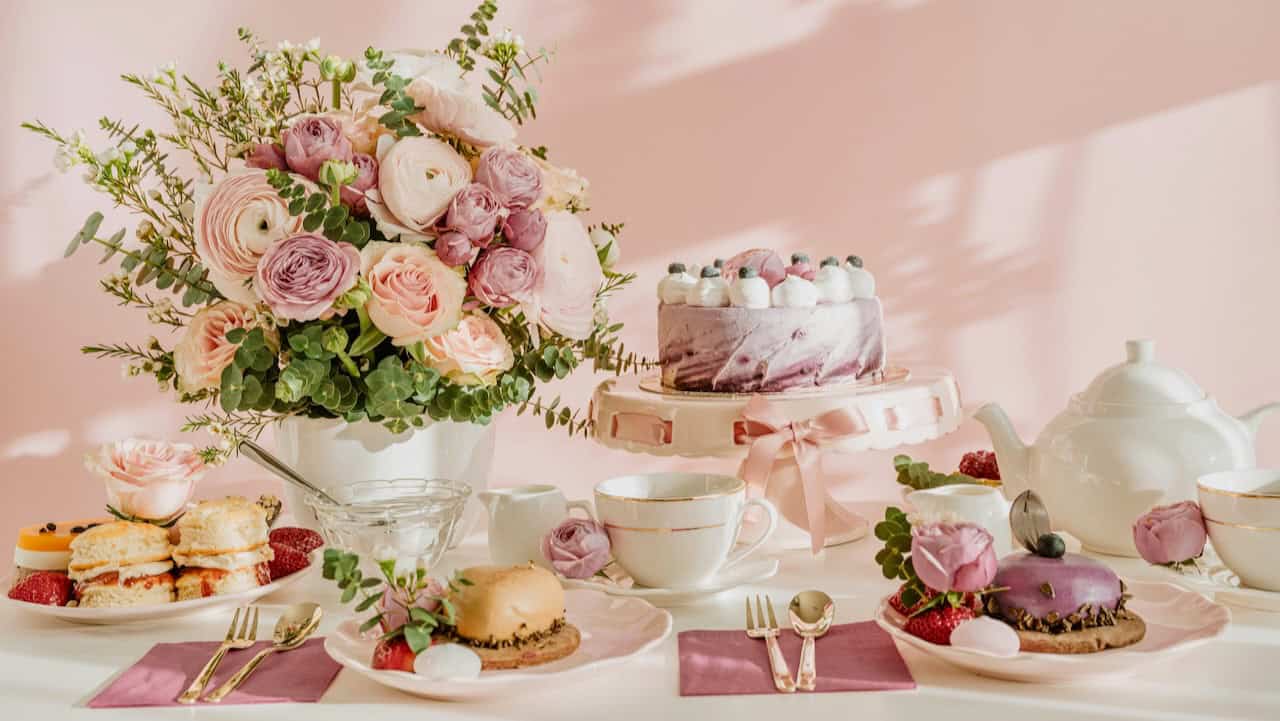
How many of each thing should land on the table when you host afternoon tea? Three to four sandwich halves, one to two scones, and two to three sweets per guest, stacked across three tiers from savoury at the bottom to sweet at the top.
That tiered order is the whole secret of a tea party menu. It is not a random spread of pretty food. It is a sequence that walks guests from the lightest savoury bite up to the richest sweet, with warm scones bridging the middle, so each course makes room for the next.
Build the menu around those three tiers and the planning, the shopping, and the serving fall into place. Here is the full plan: what goes on each tier, what to bake versus buy, the tea pairings that round it out, and how to scale the whole thing for your headcount.
At a Glance
- A classic tea party menu runs three tiers: savoury sandwiches on the bottom, warm scones in the middle, and small sweets on top.
- Plan three to four sandwich halves, one to two scones, and two to three sweets per guest.
- The savoury tier balances one vegetable, one egg, one fish, and one meat filling so it does not feel repetitive.
- Pair the menu with one robust black blend and one lighter or caffeine-free option for guests who want a choice.
- Bake scones and sweets a day ahead, buy what you can, and assemble sandwiches the morning of to keep hosting calm.
What Is a Tea Party Menu?
A tea party menu is the planned set of small savoury and sweet courses you serve at afternoon tea, organized into three tiers and paced from light to rich. For a home host, the value is not the recipe list but the structure: knowing what belongs on each tier, how many of each item per guest, and what you can make ahead so you are pouring tea rather than plating at the last minute. Unlike a buffet or a grazing spread, an afternoon tea menu is sequenced, so guests move from finger sandwiches up through scones to sweets in a deliberate order that keeps the whole table feeling intentional.
The Three-Tier Logic of a Tea Party Menu
A tea party menu earns its shape from the tiered stand: savoury on the bottom, scones in the middle, sweets on top. You eat from the bottom up, which is exactly how the flavours should build. Start light and salty, move through the warm buttery middle, and finish on sugar.
That order matters more than the hardware. A tier-by-tier breakdown like Oh, How Civilized’s tea party menu maps the same savoury-to-sweet progression, and it is the spine every other planning decision hangs on. Decide the tiers first, then fill them.
Each tier has a job to do:
- The bottom savoury tier takes the edge off hunger with finger sandwiches and small savoury bites, without filling anyone up.
- The middle tier brings warm scones with clotted cream and jam, the centerpiece guests look forward to most.
- The top sweet tier offers a small selection of cakes, tarts, and biscuits to close on a high note.
You do not need an actual tiered stand to follow the logic. Three plates or a long board work, as long as you serve in that order. With the structure set, the savoury tier is where the menu starts to take real shape.
|
Shape The Whole Tea Menu First |
Savoury Tier: Sandwiches and Small Bites
The savoury bottom tier is the workhorse of the menu, and the part guests reach for first. Plan three to four sandwich halves per person, and offer two or three different fillings so nobody gets bored halfway through. A little surplus is wise here, because the savoury tier always disappears faster than the sweets.
Balance the fillings rather than doubling up on one. A good afternoon tea ideas savoury rule of thumb is one vegetable, one egg, one fish, and one meat, which keeps the tier varied without turning shopping into a project. Cut everything small: crustless fingers or neat triangles, light enough to eat in two bites between sips.
A reliable savoury lineup looks like this:
- Cucumber and butter: the signature, thin and cool, on lightly buttered white bread.
- Egg and cress: soft, classic, and the easiest to make in volume.
- Smoked salmon and cream cheese: the touch of luxury most guests expect on the tier.
- Coronation chicken or ham: a heartier filling for anyone arriving genuinely hungry.
If you would rather pull the savoury bites from a wider spread, our grazing table ideas show how to scale finger food generously. Add one or two warm savoury bites if your crowd is larger, then move up to the tier most people are really waiting for.
Middle Tier: Scones with Jam and Cream
Scones are the heart of any traditional afternoon tea menu, and the one course guests judge you on. Plan one to two per person, kept small at about two inches across so they rise tall and split neatly. Half plain, half fruit, is the classic split.
Serve them warm. A scone fresh from a brief reheat, still releasing steam when it splits, beats a cold one every time. Set out clotted cream and good jam in separate small bowls and let guests build their own, which sidesteps the friendly Cornish-versus-Devon debate about what goes on first.
The accompaniments earn their place on the tier:
- Clotted cream is the non-negotiable for a proper scone, thick and barely sweet.
- Strawberry or raspberry jam should be spooned generously so it shows at the edges.
- Lemon curd makes a bright alternative that pairs especially well with plain scones.
A specialist recipe archive like TeaTime Magazine’s afternoon tea recipes is a good source for variations, and the same make-ahead thinking in our cook-ahead dinner party menu applies here. Bake the day before, then refresh in a low oven for a few minutes before guests sit. With the warm middle handled, the top tier is pure pleasure.
|
Hosting Tip: Keep Top-Tier Sweets Under Two Bites Each |
Top Tier: Sweets and Small Cakes
The top tier closes the menu on sugar, and the trick is variety in miniature. Plan two to three sweets per guest, and aim for two or three different kinds rather than one large cake. Small, bite-sized pieces let everyone try several without losing room.
Mix textures and flavours across the tier: something fruity, something buttery, something with a little chocolate. A short, varied selection looks far more generous than a single dense slice, and it photographs beautifully on the stand.
Sweets that suit the top tier include:
- Victoria sponge slices: cut small, the most traditional choice for the tier.
- Lemon or fruit tartlets: bright and sharp to offset the richer bites.
- Macarons and shortbread: neat, sturdy, and easy to buy rather than bake.
- Mini scones turned sweet: a fruit or blueberry batch doubles as a top-tier option.
A blueberry batch is a clever way to stretch one bake across two tiers, and recipes like these blueberry scones from Elisabeth & Butter or Preppy Kitchen’s blueberry scones work well sized down. Lean on the season for the sweet flavours, the way our summer dinner party menu does with peak fruit. With all three tiers built, the drinks tie the table together.
Tea Pairings and Drinks to Round It Out
Tea is the drink the whole high tea menu is built around, so give guests a real choice without crowding the table. Two well-chosen teas cover almost everyone: one robust black blend and one lighter or caffeine-free option. Pour the black blend first, since it stands up to the savoury tier.
A practical pairing for a tea party menu looks like this:
- One bold black blend such as English Breakfast or Assam, strong enough to carry milk and the savoury course.
- One lighter option like Earl Grey, or a fruit or herbal infusion for guests avoiding caffeine.
- The fixings on the side: milk, lemon slices, and sugar so guests dress their own cups.
For the menu itself, a loose-leaf blend made for the occasion is worth the small effort. A heritage tea house like Whittard offers an afternoon loose tea blend that anchors the table well, and you can read up on tea sourcing at Harney & Sons if you want to go deeper.
For a celebratory daytime crowd, a light sparkling water or a small bubbly adds a festive note, and ideas from our best brunch cocktails translate easily to a tea table. With the drinks set, only the headcount math remains.
|
Scale Every Tier Before You Shop |
How Much of Each Per Guest and How to Scale
A menu only works if the quantities do, so anchor every afternoon tea menu ideas list to a per-guest baseline and multiply from there. The classic counts hold up across almost any headcount.
Per guest, plan:
- Sandwiches: three to four halves, across two or three fillings.
- Scones: one to two small ones, with cream and jam to share.
- Sweets: two to three bite-sized pieces, in two or three kinds.
Scaling is mostly multiplication, with two adjustments. Round the savoury tier up, because it goes fastest, and add a little for guests who skipped lunch. For a larger group, lean on what you can buy: macarons, shortbread, and good jam are easy to source so your oven time stays sane.
Presentation scales too. Styling cues from a publication like Elle Decor’s entertaining ideas help a bigger spread still feel composed, and a tidy menu or place card at each setting keeps a crowd oriented. If the tea doubles as a shower, the self-serve approach in our DIY mimosa bar setup lets guests pour while you plate.
Then build a make-ahead plan so the day itself is calm. A full sample run like this ultimate afternoon tea party menu shows how the pieces come together. Bake scones and sweets a day ahead, prep sandwich fillings the night before, and assemble sandwiches the morning of, and an outdoor table styled like this garden tea party menu comes together with almost nothing left to do once guests arrive.
On the day, you only brew, plate, and refresh the scones, which is exactly the point of planning the tiers in the first place.
Frequently Asked Questions
What do you serve at a tea party?
A classic tea party menu has three tiers: savoury finger sandwiches on the bottom, warm scones with jam and clotted cream in the middle, and small sweets like cakes, tarts, and biscuits on top. Serve it with one or two teas, plus milk, lemon, and sugar.
What is on a traditional afternoon tea menu?
A traditional afternoon tea menu includes cucumber, egg, and smoked salmon finger sandwiches, plain and fruit scones with clotted cream and jam, and a selection of small pastries such as Victoria sponge, tarts, and macarons. Tea, usually a black blend, is poured throughout.
How do you plan a tea party menu for a crowd?
Build around the three tiers, then multiply per guest: three to four sandwich halves, one to two scones, and two to three sweets each. Bake scones and sweets ahead, buy what you can, and assemble sandwiches the morning of. Set out two teas so guests have a choice.
What sweets go on a tea party menu?
Top-tier sweets are small and varied: Victoria sponge slices, lemon tarts, fruit tartlets, macarons, shortbread, and petit fours work well. Keep each bite-sized so guests can sample several. Aim for two or three different sweets and a mix of fruit, chocolate, and buttery flavours.
What tea should you serve at a tea party?
Offer one robust black blend such as English Breakfast or Assam and one lighter option like Earl Grey or a fruit or herbal infusion for non-caffeine drinkers. Serve milk, lemon, and sugar on the side. Two well-chosen teas cover most guests without crowding the table.
Can you make a tea party menu ahead of time?
Yes, most of it. Bake scones and sweets the day before and store them airtight, prep sandwich fillings the night before, and assemble sandwiches the morning of. On the day you only brew tea, plate the tiers, and refresh the scones, which keeps hosting calm.
Continue Reading:
More On Afternoon Tea
- How to Host an Afternoon Tea Party in 7 Easy Steps
- Tea Sandwiches: 12 Classic Fillings for Tea Time
- Scones for Afternoon Tea: A Foolproof 6-Step Recipe
- High Tea vs Afternoon Tea: What Sets Them Apart
- Garden Tea Party Themes: 9 Ideas to Set the Mood
More from The Gourmet Host
- Graduation Party Centrepiece Ideas to Celebrate
- 6 White Wine Substitutes for Cooking Beyond Vinegar
- Coed Baby Shower Ideas: Tips for Fun Couples Showers
- Small Group Icebreaker Questions That Spark Real Talk
- Complete Dinner: Plan a Full Meal Start to Finish
Explore TGH Categories
- Set the Scene
- Drinks and Bar
- Plan the Meal
- Engage with Guests
- Games and Toasts
- Tools and Techniques
- Why We Gather