How to Make Homemade Pasta: A Hands-On Hosting Skill
 11 min read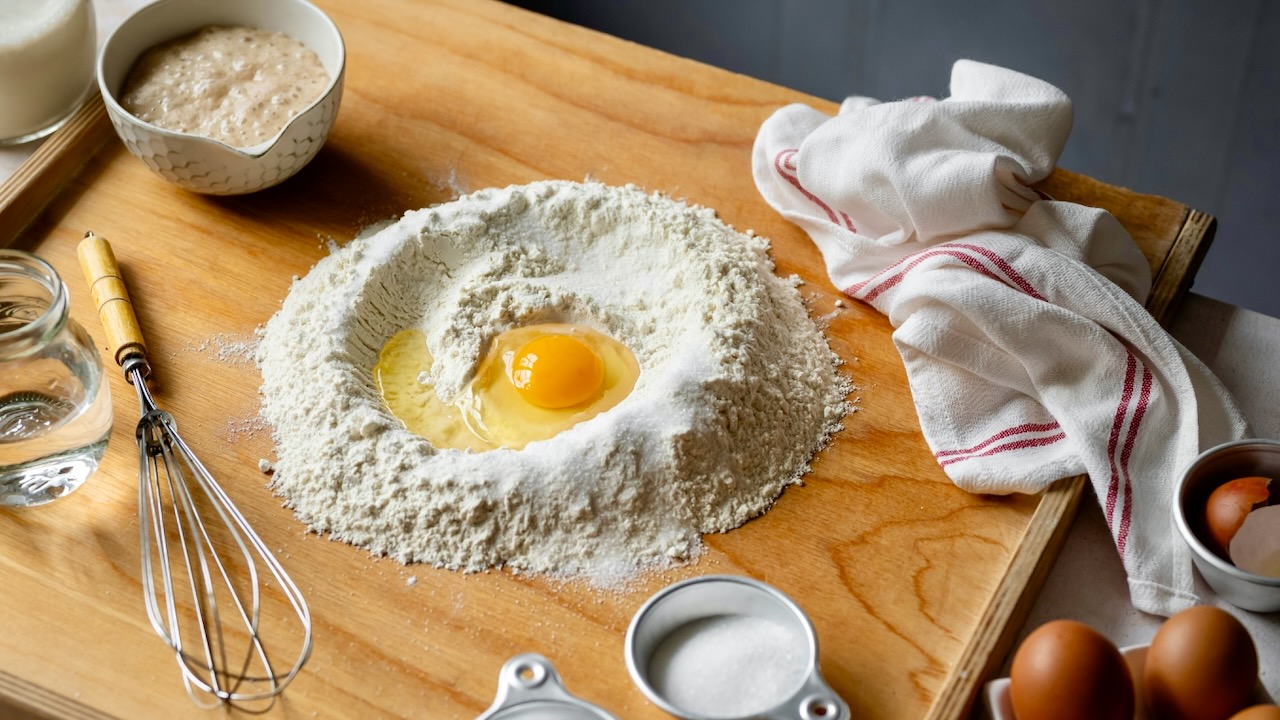
Flour, eggs, olive oil, a rolling pin, and a clean countertop — that is genuinely all it takes to make fresh pasta from scratch. The dough comes together in ten minutes. A thirty-minute rest lets the gluten relax so it rolls thin without fighting you. Cut it into tagliatelle, drop it in boiling water, and dinner is ready in under three minutes.
Fresh pasta also happens to be one of the best group activities you can put at the center of a dinner party — set up stations, hand guests a rolling pin, and let the pasta-making become the evening itself.
At a Glance
- You need only flour, eggs, olive oil, a rolling pin, and a clean work surface to make fresh homemade pasta from scratch.
- The dough rest is essential—thirty minutes of relaxation lets gluten develop so the dough rolls thin without springing back.
- A wine bottle works as a stand-in rolling pin if yours is buried in a drawer.
- Fresh pasta cooks in 2–3 minutes, far faster than dried, so have your sauce ready before the water boils.
- Pasta night doubles as an interactive hosting activity when you set up stations and let guests cut their own shapes.
What Is Homemade Pasta Without a Machine?
Homemade pasta without a machine is the practice of mixing, kneading, rolling, and cutting fresh pasta dough entirely by hand using a rolling pin and a sharp knife instead of a pasta machine or pasta roller. Unlike machine-extruded pasta, hand-rolled sheets carry slight thickness variations that trap sauce in every bite, giving your dish a rustic, velvety texture no store-bought brand can replicate.
Why Hand-Rolled Pasta Belongs at Your Next Gathering
The best part of making handmade pasta at a dinner party is that it turns the cooking process into entertainment. Instead of disappearing into the kitchen for an hour, you invite friends to flour their hands and roll alongside you.
The result is a table covered in imperfect, beautiful shapes—and a group that feels genuinely invested in the meal before the first forkful.
According to King Arthur Baking’s guide to rolling pasta without a machine, even beginners can produce thin, even sheets with a little patience and a lightly floured surface.
That low barrier to entry is exactly what makes this a perfect group activity: nobody needs special equipment, and the learning curve is gentle enough that a first time pasta maker can produce something delicious.
- No expensive gear required: A rolling pin, a cutting board, and a sharp knife handle every shape from fettuccine to pappardelle.
- Built-in conversation: Kneading and rolling side by side creates the kind of natural, low-pressure interaction that sitting across a table sometimes doesn’t.
- Tangible accomplishment: Guests leave feeling they contributed something real to the evening—not just showed up and ate.
As the team behind Simply Recipes’ step-by-step pasta guide points out, hand-cut noodles have charming irregularities that catch sauce beautifully. That imperfection is a feature, not a flaw—and it takes the pressure off everyone at the counter.
Once your guests see how simple the process is, the only question left is which flour to reach for—and the answer matters more than most recipes let on.
|
Keep the Cooking Plan Together |
The Best Flours for Homemade Pasta
Your flour choice shapes everything—texture, flavor, and how forgiving the dough is to work with.
Most homemade pasta dough recipes call for all-purpose flour, and that’s a perfectly reliable starting point.
But swapping in semolina flour for a portion of the blend adds a golden color and a subtle bite that holds up better in salted water.
The Clever Carrot’s beginner pasta dough guide recommends a 50/50 blend of all-purpose and semolina as a sweet spot for home cooks who want structure without toughness.
If your guests include someone with a lighter preference, lean heavier on all-purpose—the result is softer and silkier.
- All-purpose flour: Soft, pliable dough that’s easy to roll. Produces a delicate noodle with a tender chew. Use the full amount of grams of flour your recipe calls for and add egg yolks for richness.
- Semolina flour: Coarser grind that creates a firmer bite and golden hue. Ideal for shapes that need to hold their structure in a heavy sauce.
- 50/50 blend: Combines the forgiving nature of all-purpose with semolina’s toothsome texture. Our go-to for hosting because it satisfies a wide range of palates.
According to Epicurious’s guide to making fresh pasta by hand, whole eggs produce a sturdier dough while extra egg yolks yield a richer, more golden sheet. For a gathering where the pasta is the star, the yolk-heavy route delivers a rich flavor guests notice immediately.
With your flour chosen and your dough mixed, the real hands-on fun begins at the rolling stage.
|
Hosting Tip: Premeasure Every Pasta Station |
Rolling and Cutting Pasta Without Special Equipment
You do not need a pasta maker or pasta roller to produce thin, even sheets. A standard rolling pin and a clean work surface are all the special equipment this method requires. If your rolling pin is missing, a wine bottle works surprisingly well—its smooth glass surface glides over dough with minimal sticking.
Start by dividing your rested dough into pea-sized pieces—actually, aim for pieces roughly the size of a tennis ball. Work one piece of dough at a time, keeping the remaining dough pieces under plastic wrap so they don’t dry out.
Kitchen Sanctuary’s detailed pasta tips suggest rolling from the center outward, rotating the sheet a quarter turn after every few passes to maintain an even thickness.
- Roll the dough on a lightly floured surface until you can see the shadow of your hand through the sheet—that’s roughly the right thinness for fettuccine or tagliatelle.
- Dust each finished sheet with a bit of flour and stack them between layers of kitchen towel to prevent sticking while you roll the next batch.
- Use a sharp knife to cut noodles to your desired width. Hang cut pasta on the back of a chair, a pasta drying rack, or a clean broom handle for a few minutes before cooking.
Wandercooks’ hand-cut pasta walkthrough notes that slightly thicker noodles are more forgiving for beginners, and Garden Betty’s from-scratch method confirms that imperfect widths are part of the charm.
In our experience hosting pasta nights, the table always lights up when guests drape their own noodles over a makeshift drying line.
Once your noodles are cut, drop them into a large pot of salted water at a rolling boil. Fresh pasta cooks in just 2–3 minutes—far less cooking time than dried—so keep your favorite sauce warm and ready.
The The Gourmet Host app can help you time each course so the pasta hits the bowl at the perfect moment.
With the technique down, the natural next step is turning the whole process into a structured group activity that runs itself.
|
Share Every Prep Task Clearly |
Can You Turn Pasta Night into a Group Activity?
Absolutely—and it’s one of the simplest interactive dinner party formats you can run. The key is setting up stations so every guest has a role, from kneading to cutting to sauce tasting.
We’ve found that groups of four to six hit the sweet spot: enough hands to keep things moving, few enough that everyone has counter space.
Bigger Bolder Baking’s 2-ingredient pasta approach proves you can strip the recipe down to flour and water if allergies or preferences call for it—meaning no guest gets left on the sidelines.
For a more traditional route, set out bowls of purpose flour, whole eggs, and a drizzle of olive oil at each station and walk everyone through the well method together.
- Station one—mixing and kneading: Guests crack eggs into the flour well and work the dough until it’s smooth. This is the messiest and most fun stage, so lay down parchment or a washable cloth.
- Station two—rolling: After the dough rest, guests roll their portion on a flat surface using a rolling pin or wine bottle. Encourage them to go thin—paper-thin sheets reward with the best al dente bite.
- Station three—cutting and shaping: Provide a sharp knife and a cutting board at each spot. Let guests choose their width: wide pappardelle, classic fettuccine, or rustic maltagliati torn by hand.
Jolly Tomato’s guide to making pasta without a machine reinforces that the whole point is participation over perfection. Store finished noodles in a single layer on a floured kitchen towel or in an airtight container if you’re prepping ahead.
A delicious recipe becomes something more when the people around your table helped shape every noodle—and that’s the kind of hosting experience that sticks.
Whether you’re rolling your own pasta for the first time or hosting your fifth pasta night, the The Gourmet Host app helps you plan every detail so you can stay at the counter with your guests instead of scrambling through a checklist.
Frequently Asked Questions
Can you make pasta with just flour and water?
Yes. A simple flour-and-water dough produces a chewier, more rustic noodle that works beautifully with hearty sauces. The texture differs from egg-based pasta; it’s firmer and slightly more translucent. This version is ideal for guests with egg allergies and still delivers consistent results when rolled thin.
How thin should homemade pasta be?
Aim for sheets thin enough to see the outline of your hand through the dough, roughly one to two millimeters. Thinner sheets cook faster and develop a better al dente bite. For filled pastas like ravioli, go slightly thicker so the dough can hold the filling without tearing during the boil.
Why does pasta dough need to rest?
The dough rest allows gluten strands to relax after kneading, making the dough pliable enough to roll thin without snapping back. Thirty minutes at room temperature under plastic wrap is the standard window. Skipping this step leads to a hard time rolling and uneven sheets that cook inconsistently.
Can you freeze fresh homemade pasta?
Absolutely. Spread cut noodles in a single layer on a floured baking sheet, freeze until firm, then transfer to an airtight container or zip-top bag. Frozen fresh homemade pasta keeps for up to two months. Cook directly from frozen: just add an extra minute of cooking time to reach the perfect pasta texture.
How do you roll pasta without a machine?
Use a long rolling pin and work from the centre outward, rotating the sheet a quarter turn between passes. Keep the surface lightly floured and rest the dough if it fights back. Hand-rolled sheets end up slightly thicker and more textured, which suits ragu better than a machine sheet does.
Which flour makes the best fresh pasta?
Tipo 00 gives the silkiest sheets and is worth buying if you make pasta often. Semolina adds bite and holds shaped pasta better. All-purpose flour works perfectly well for a first attempt. Many good recipes use a blend, roughly two parts 00 to one part semolina.
Continue Reading:
More On Cooking Techniques
- 4 Advanced Methods & Techniques For Creative Home Cooking
- Cold Smoking vs Hot Smoking: Which Technique Is Right for You?
- Different Methods & Techniques For Cooking Like a Chef
- How to Flambé at Home: A Host’s Guide to Safe Flames
- How to Sous Vide: The Stress-Free Technique Every Host Needs
- The Best Hot Sauce Making Kits for a DIY Dinner Party Activity
- The Complete Cooking Techniques List for Confident Home Hosts
More from The Gourmet Host
- 60 Fun This or That Questions for Your Group Game
- 50 Disney and Decade Trivia Questions for Adults
- Tea Party Menu: A 3-Tier Plan for Afternoon Tea
- How to Host a Dinner Party: Step-by-Step Guide
- 12 S’mores Bar Ideas for a Sweet DIY Dessert Station
Explore TGH Categories
- Set the Scene
- Drinks and Bar
- Plan the Meal
- Engage with Guests
- Games and Toasts
- Tools and Techniques
- Why We Gather